Roanoke Veterans Administration Hospital Historic District

Why it's listed
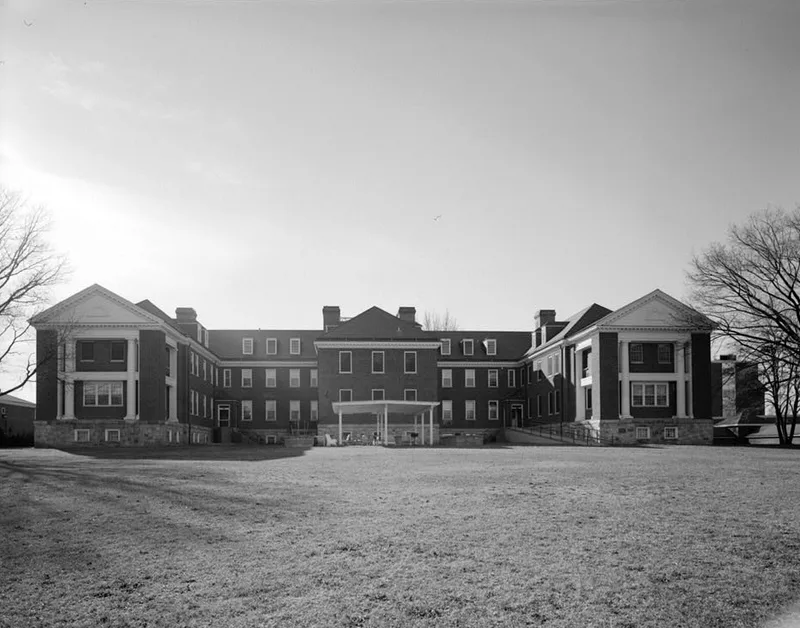
Begun in 1934, this hospital campus on Roanoke Boulevard in Salem, Virginia, was built by the Veterans Administration as a neuropsychiatric hospital and still serves veterans today. The district covers about 206 acres and holds 83 resources, of which 54 date from the 1934-1950 period of significance. Buildings fall into three loose clusters: a central core with a monumental Main Building and H-shaped patient ward buildings linked by enclosed corridors, residential quarters along a curving drive, and maintenance and utility buildings. Colonial Revival and Classical Revival detailing is concentrated on the most visible buildings, and a planned landscape of lawns, mature trees and drives survives. The campus also documents racial segregation: one ward building and attendants' housing were set aside for African American patients and staff, a practice that lasted into the 1950s. It represents the neuropsychiatric type of Second Generation Veterans Hospitals, with farm and recreation areas.
Machine-generated summary. This summary was generated by a language model from the official nomination document and has not been reviewed line by line by an editor. It may contain errors. Check the source document before relying on any detail. Source: nomination document (PDF) · catalog entry. Generated October 2026 (model claude-sonnet-5-5, prompt v1.0-2026-10-29).
| Period of significance | 1934-1950 |
|---|---|
| Styles | Late 19th and 20th Century Revivals: Colonial Revival, Classical Revival |
| Areas of significance | Architecture, Politics/Government, Health/Medicine |
| Acreage | 206 |
| Boundary source | NPS cultural-resource GIS polygon |
| Full listing page | Roanoke Veterans Administration Hospital Historic District (property record) |
What listing means for this property
This is a historic district. Buildings within its boundary are either contributing (they add to the district's significance) or non-contributing. Owners of contributing income-producing buildings can claim the 20% federal rehabilitation tax credit; homeowners should look at state credits. National Register districts impose no design review by themselves; a local historic district ordinance, if one exists, does (the difference explained).
General information, not legal or tax advice. Rules change; confirm with your State Historic Preservation Office or a qualified adviser.