Riverview

Why it's listed
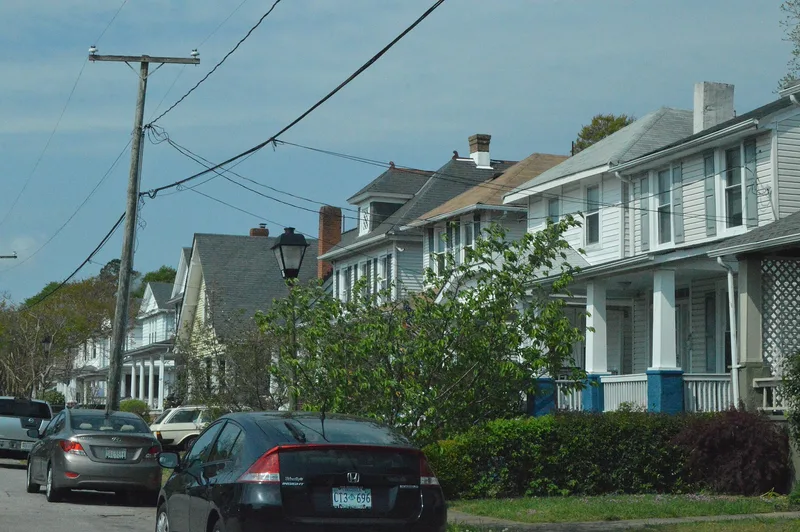
Riverview is a residential neighborhood of roughly 97 acres in Norfolk, Virginia, bounded by the Lafayette River, Lafayette Park and Granby Street. It grew mostly in the early twentieth century as a streetcar suburb, laid out from several separately platted tracts along diagonal, tree-lined streets. The earliest houses, built around 1895 to 1912, were large, highly ornamented Queen Anne and Colonial Revival dwellings on spacious lots. After minimum construction costs were lowered in 1913, smaller houses on single lots filled in the area, including bungalows, American Foursquares, and Tudor and Spanish Colonial examples. A few apartment buildings appeared as well. Construction slowed after 1929, and later infill generally echoed the older styles. The district holds 251 resources, all domestic, of which 197 are counted as contributing. It is considered significant for its cohesive collection of late nineteenth and early twentieth century residential architecture and its role in Norfolk's suburban growth.
Machine-generated summary. This summary was generated by a language model from the official nomination document and has not been reviewed line by line by an editor. It may contain errors. Check the source document before relying on any detail. Source: nomination document (PDF) · catalog entry. Generated October 2026 (model claude-sonnet-5-5, prompt v1.0-2026-10-29).
| Styles | Late Victorian (Queen Anne, Shingle Style); Colonial Revival, Tudor Revival, Mission/Spanish Colonial Revival; Bungalow/Craftsman; Ranch |
|---|---|
| Areas of significance | Architecture, Community Planning and Development |
| Acreage | 97 |
| Boundary source | NPS cultural-resource GIS polygon |
| Full listing page | Riverview (property record) |
What listing means for this property
This is a historic district. Buildings within its boundary are either contributing (they add to the district's significance) or non-contributing. Owners of contributing income-producing buildings can claim the 20% federal rehabilitation tax credit; homeowners should look at state credits. National Register districts impose no design review by themselves; a local historic district ordinance, if one exists, does (the difference explained).
General information, not legal or tax advice. Rules change; confirm with your State Historic Preservation Office or a qualified adviser.