Pulaski Historic Residential District

Why it's listed
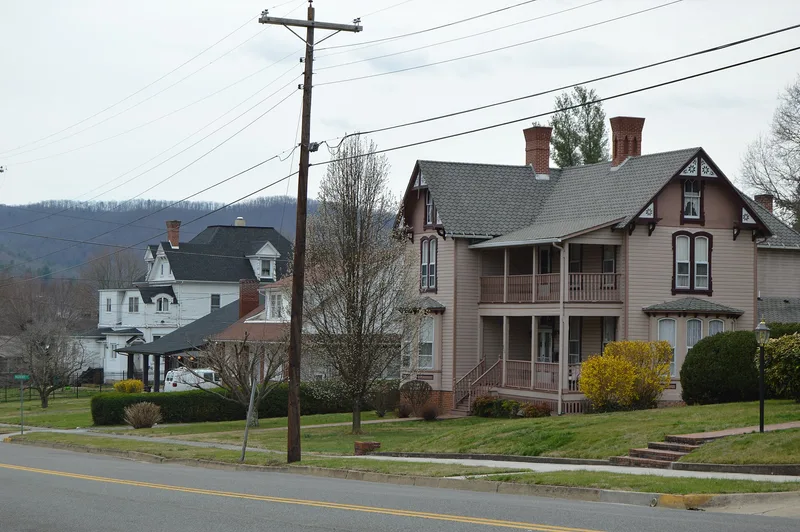
Pulaski's historic residential district covers most of the neighborhood north of the town's commercial core, beside Peak Creek in Pulaski County, Virginia. It holds 363 buildings, including 321 single-family houses, eight churches, a former high school, a hospital and the municipal waterworks. Most contributing buildings are frame or brick houses from the 1880s to the 1940s. The streets follow plats drawn for the Pulaski Land and Improvement Company in the 1880s, with numbered streets, named avenues, tree-planted boulevards and a small square at Washington Avenue and Sixth Street. Prospect Avenue, with its curving form, holds the grandest homes of factory managers, such as the Queen Anne-style Taylor House, while Henry Avenue has workers' housing. Queen Anne houses gave way to Colonial Revival ones after 1900, and many vernacular center-passage and T-plan houses survive. The planning is described as rare in Virginia and among Appalachian industrial towns.
Machine-generated summary. This summary was generated by a language model from the official nomination document and has not been reviewed line by line by an editor. It may contain errors. Check the source document before relying on any detail. Source: nomination document (PDF) · catalog entry. Generated October 2026 (model claude-sonnet-5-5, prompt v1.0-2026-10-29).
| Styles | Queen Anne, Colonial Revival, vernacular center-passage and T-plan houses, with Bungalow, Tudor Revival and Gothic Revival examples |
|---|---|
| Areas of significance | Community Planning and Development, Architecture |
| Acreage | 145 |
| Boundary source | NPS cultural-resource GIS polygon |
| Full listing page | Pulaski Historic Residential District (property record) |
What listing means for this property
This is a historic district. Buildings within its boundary are either contributing (they add to the district's significance) or non-contributing. Owners of contributing income-producing buildings can claim the 20% federal rehabilitation tax credit; homeowners should look at state credits. National Register districts impose no design review by themselves; a local historic district ordinance, if one exists, does (the difference explained).
General information, not legal or tax advice. Rules change; confirm with your State Historic Preservation Office or a qualified adviser.