Prices Fork Historic District

Why it's listed
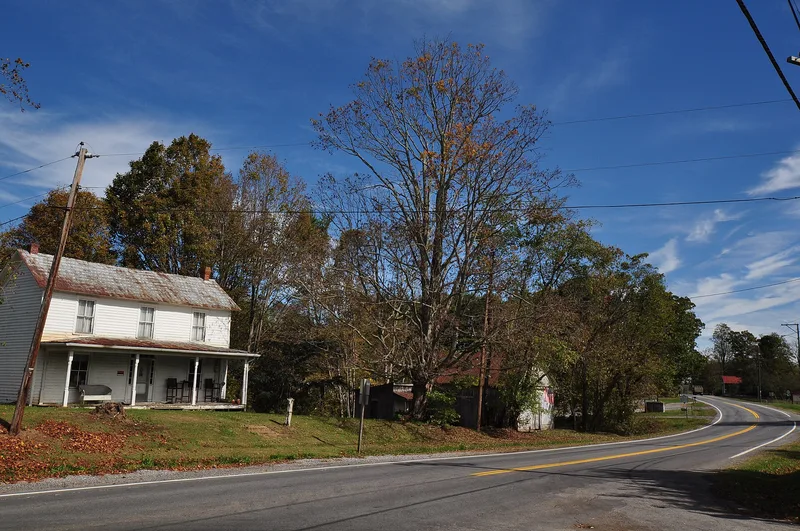
Prices Fork is a rural village in Montgomery County, Virginia, clustered along VA Route 685 where the old road toward Peppers Ferry splits from the road to Browns Ferry. The district holds fifteen buildings: houses, two stores, two churches, a former schoolhouse and outbuildings, dating from 1871 to about 1930. James Bain Price built the brick Greek Revival house, with its log meathouse and barn, and a gable-fronted frame store in 1871. St. Marks Lutheran Church moved to the village in 1877, and a Methodist church, further houses and a second store followed. Large oaks, maples and catalpas tie the buildings together visually. The district was listed for architecture because it shows how a country-store village developed beside a turnpike between the late nineteenth and early twentieth centuries. Its consistency and integrity set it apart from other communities in the western part of the county. A modern grange hall and a ranch-style parsonage are the only noncontributing buildings.
Machine-generated summary. This summary was generated by a language model from the official nomination document and has not been reviewed line by line by an editor. It may contain errors. Check the source document before relying on any detail. Source: nomination document (PDF) · catalog entry. Generated October 2026 (model claude-sonnet-5-5, prompt v1.0-2026-10-29).
| Period of significance | 1871-1940 |
|---|---|
| Styles | Mid-19th c.: Greek Revival; other: center passage plan; Foursquare |
| Areas of significance | Architecture |
| Acreage | 9 |
| Boundary source | NPS cultural-resource GIS polygon |
| Full listing page | Prices Fork Historic District (property record) |
What listing means for this property
This is a historic district. Buildings within its boundary are either contributing (they add to the district's significance) or non-contributing. Owners of contributing income-producing buildings can claim the 20% federal rehabilitation tax credit; homeowners should look at state credits. National Register districts impose no design review by themselves; a local historic district ordinance, if one exists, does (the difference explained).
General information, not legal or tax advice. Rules change; confirm with your State Historic Preservation Office or a qualified adviser.