Powhatan Rural Historic District

Why it's listed
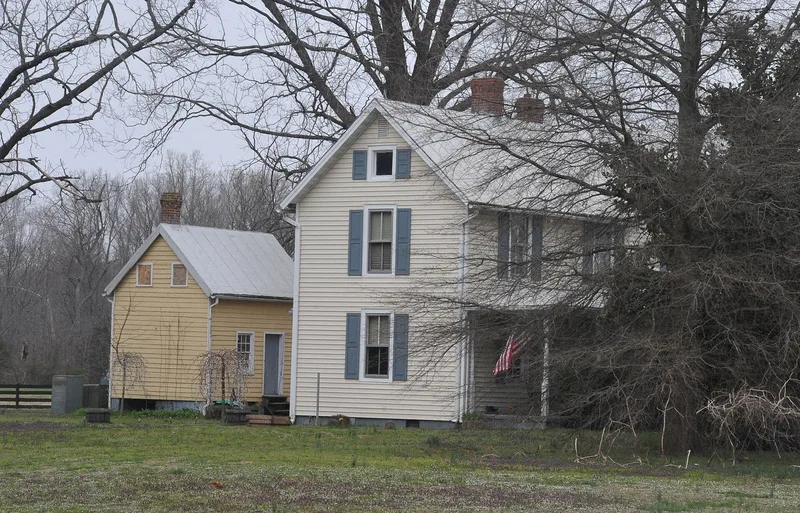
Powhatan Rural Historic District is a working farm and estate of about 1092 acres in King George County, Virginia, on a ridge above the Rappahannock River valley. It combines three historic farm clusters: the brick Greek Revival house called Powhatan, built around 1832 for planter Edward Thornton Tayloe; the Federal-style frame house at Mount Ida, dated to about 1835 by a nail analysis; and the Hudson farm, developed in the late nineteenth and early twentieth centuries after Tayloe family land was sold. Tayloe was among the county's largest producers of hay, butter and livestock before the Civil War, when Union troops quartered at the property and its fortunes declined. Raymond R. Guest began reassembling the Tayloe lands in 1955, renovating the main house and adding stables and a race track. No antebellum farm structures or slave dwellings survive, but the houses, family cemetery, and open agricultural setting preserve the historic layout of the plantation landscape.
Machine-generated summary. This summary was generated by a language model from the official nomination document and has not been reviewed line by line by an editor. It may contain errors. Check the source document before relying on any detail. Source: nomination document (PDF) · catalog entry. Generated October 2026 (model claude-sonnet-5-5, prompt v1.0-2026-10-29).
| Styles | Greek Revival (Powhatan); Federal (Mount Ida) |
|---|---|
| Areas of significance | Agriculture, Architecture |
| Acreage | 1092 |
| Boundary source | NPS cultural-resource GIS polygon |
| Full listing page | Powhatan Rural Historic District (property record) |
What listing means for this property
This is a historic district. Buildings within its boundary are either contributing (they add to the district's significance) or non-contributing. Owners of contributing income-producing buildings can claim the 20% federal rehabilitation tax credit; homeowners should look at state credits. National Register districts impose no design review by themselves; a local historic district ordinance, if one exists, does (the difference explained).
General information, not legal or tax advice. Rules change; confirm with your State Historic Preservation Office or a qualified adviser.