Pleasant Historic District, Chopawamsic RDA Camp 4

Why it's listed
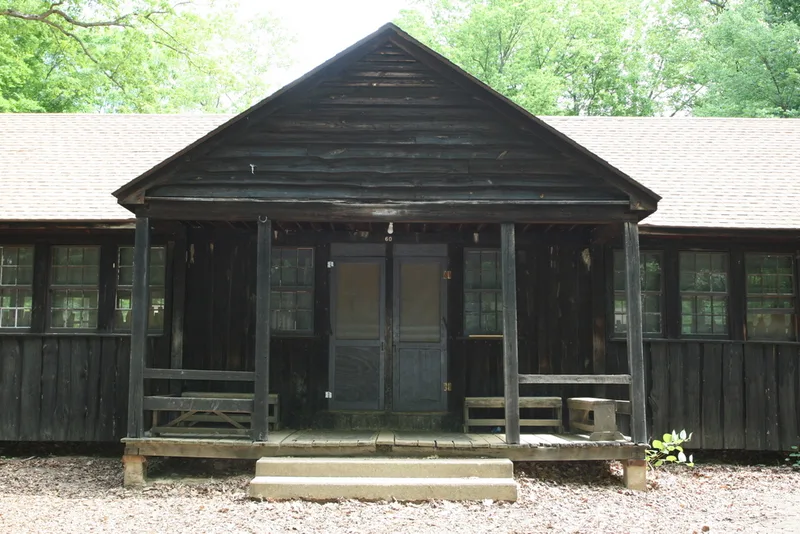
Camp 4, known as Pleasant, is a summer camp complex within Prince William Forest Park near Triangle, Virginia. Covering about 132 acres, it was built between 1937 and 1940 by Civilian Conservation Corps and Works Progress Administration crews as part of the Chopawamsic Recreational Demonstration Area. Its buildings are arranged like the spokes of a wheel. A hub of dining hall, craft building, infirmary, administration and staff quarters is surrounded by five unit camps, each with a lodge, a latrine and three cabins for eight to 10 campers. Construction relied on local timber, hewn into bark-edged waney board siding, with concrete piers and foundations. The district also includes two dams that form a lake on Quantico Creek, a recreation building used as a basketball court and theater, and a cable suspension footbridge from about 1936. It contains 36 contributing buildings, three contributing structures and three non-contributing resources. Its simple rustic design and its role as a model recreation project account for its listing.
Machine-generated summary. This summary was generated by a language model from the official nomination document and has not been reviewed line by line by an editor. It may contain errors. Check the source document before relying on any detail. Source: nomination document (PDF) · catalog entry. Generated October 2026 (model claude-sonnet-5-5, prompt v1.0-2026-10-29).
| Styles | NPS rustic architecture |
|---|---|
| Areas of significance | Conservation, Entertainment/Recreation, Architecture |
| Acreage | 132 |
| Boundary source | NPS cultural-resource GIS polygon |
| Full listing page | Pleasant Historic District, Chopawamsic RDA Camp 4 (property record) |
What listing means for this property
This is a historic district. Buildings within its boundary are either contributing (they add to the district's significance) or non-contributing. Owners of contributing income-producing buildings can claim the 20% federal rehabilitation tax credit; homeowners should look at state credits. National Register districts impose no design review by themselves; a local historic district ordinance, if one exists, does (the difference explained).
General information, not legal or tax advice. Rules change; confirm with your State Historic Preservation Office or a qualified adviser.