Petersburg Breakthrough Battlefield

Why it's listed
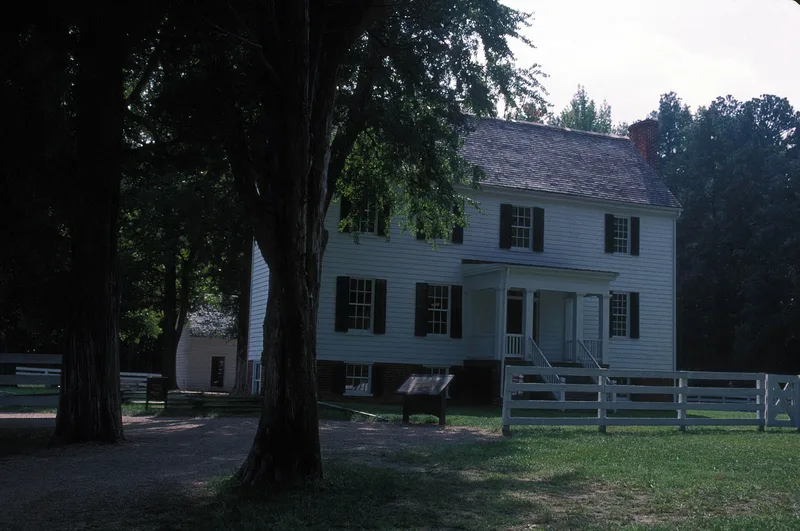
Petersburg Breakthrough Battlefield covers 647.4 acres in northeastern Dinwiddie County, Virginia, where Union troops broke the Confederate defensive line protecting Petersburg on April 2, 1865. From October 1864, soldiers of McGowan's South Carolina Brigade and others dug earthworks, rifle pits, artillery redans and dams across the Boisseau and Hart farms, and built winter huts behind the lines. About 1,700 linear feet of those works survive, partly because the marshy ground near Arthur Swamp was unsuitable for farming or development. Archaeologists in 1995 excavated three sunken winter huts, the first of their kind excavated in Virginia, and other sites remain untested. The district also includes the Hart House, a Gothic Revival cottage, and the site of the Harmon house, used briefly as a headquarters by Grant and Meade. Pamplin Historical Park occupies part of the land, with a trail following the Union assault, and its reproduction buildings are counted as noncontributing.
Machine-generated summary. This summary was generated by a language model from the official nomination document and has not been reviewed line by line by an editor. It may contain errors. Check the source document before relying on any detail. Source: nomination document (PDF) · catalog entry. Generated October 2026 (model claude-sonnet-5-5, prompt v1.0-2026-10-29).
| Styles | Other (earthen fortifications); Hart House is Gothic Revival |
|---|---|
| Areas of significance | Military, Politics/Government |
| Acreage | 647.7 |
| Boundary source | NPS cultural-resource GIS polygon |
| Full listing page | Petersburg Breakthrough Battlefield (property record) |
What listing means for this property
This is a historic district. Buildings within its boundary are either contributing (they add to the district's significance) or non-contributing. Owners of contributing income-producing buildings can claim the 20% federal rehabilitation tax credit; homeowners should look at state credits. National Register districts impose no design review by themselves; a local historic district ordinance, if one exists, does (the difference explained).
General information, not legal or tax advice. Rules change; confirm with your State Historic Preservation Office or a qualified adviser.