Paris Historic District

The National Park Service has not published a boundary polygon for this district; the map shows the listed properties inside it and the district's reference point.
Why it's listed
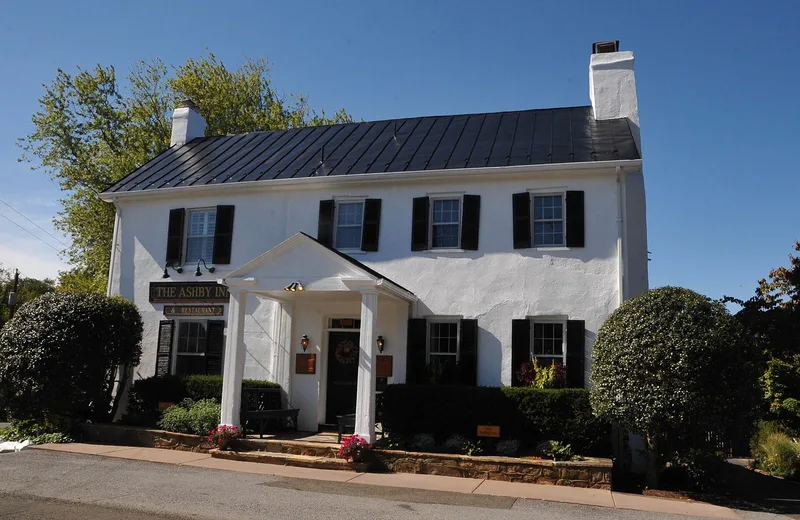
Paris is a compact village at the foot of Ashby Gap in the Blue Ridge, in northwest Fauquier County, Virginia. Land granted to Peter Glascock in 1786 was laid out as a town of 44 lots, and the Virginia General Assembly formally established it in 1810. It grew as a stopping point where roads from Alexandria, Dumfries and Fredericksburg met the route to Winchester. By 1835 it held dwellings, stores, taverns, a school, and many craft shops. The Manassas Gap Railroad bypassed it in 1852, halting major growth, so most surviving buildings date from about 1810 to 1850. Federal detailing on vernacular forms dominates, with many log houses, a brick Federal dwelling at 687 Federal Street, and later Gothic Revival and Colonial Revival examples. Later highways also bypassed the town, leaving it largely residential. The district includes 53 contributing resources, among them houses, stores, churches, a former school and a cemetery, and its setting remains protected by surrounding rural land.
Machine-generated summary. This summary was generated by a language model from the official nomination document and has not been reviewed line by line by an editor. It may contain errors. Check the source document before relying on any detail. Source: nomination document (PDF) · catalog entry. Generated October 2026 (model claude-sonnet-5-5, prompt v1.0-2026-10-29).
| Period of significance | 1786-1953 |
|---|---|
| Styles | Federal; Gothic Revival; Colonial Revival; Other: I-house; Commercial |
| Areas of significance | Architecture, Commerce, Transportation |
| Acreage | 0.9 |
| Boundary source | not published |
| Full listing page | Paris Historic District (property record) |
What listing means for this property
This is a historic district. Buildings within its boundary are either contributing (they add to the district's significance) or non-contributing. Owners of contributing income-producing buildings can claim the 20% federal rehabilitation tax credit; homeowners should look at state credits. National Register districts impose no design review by themselves; a local historic district ordinance, if one exists, does (the difference explained).
General information, not legal or tax advice. Rules change; confirm with your State Historic Preservation Office or a qualified adviser.