Opequon Historic District

Why it's listed
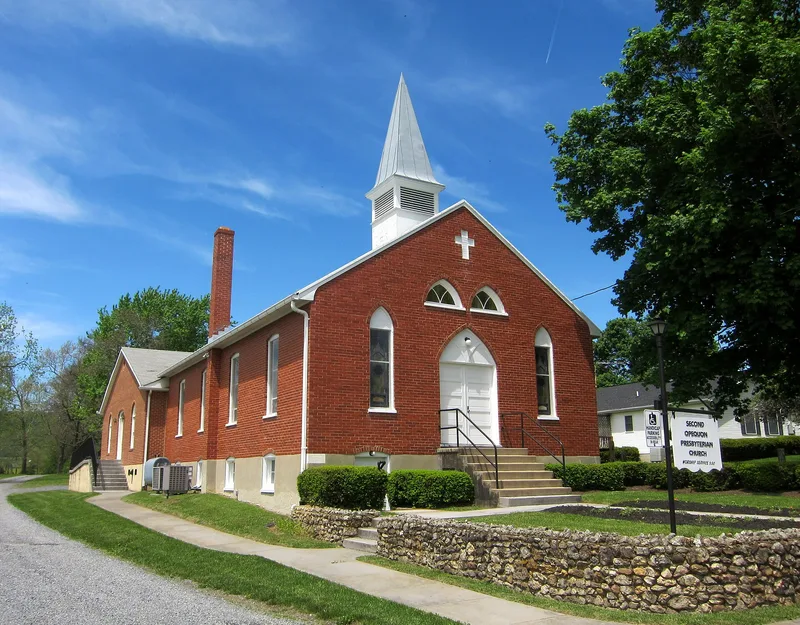
Opequon is a crossroads village about five miles southwest of Winchester, Virginia, where Cedar Creek Grade meets Miller Road beside the headwaters of Opequon Creek. Settlement began around 1736, when the Glass and Cartmell families took up land on opposite banks of the creek. Over the next two centuries the community added gristmills, a barrel factory, a general store that housed a post office from 1876 to 1948, a church that also served as a school, and homes. Surviving buildings include Race Mills, begun around 1751, the limestone Glass-Rinker-Cooper Mill from about 1812, and Homespun, built in 1771. Tokes' Inn, run by descendants of enslaved people from Greenwood, operated as a restaurant and caterer from 1918 to 1998. The district was recognized for its role in early Shenandoah Valley settlement and for its architecture spanning many periods. It covers 94 acres with 33 contributing and 4 noncontributing buildings.
Machine-generated summary. This summary was generated by a language model from the official nomination document and has not been reviewed line by line by an editor. It may contain errors. Check the source document before relying on any detail. Source: nomination document (PDF) · catalog entry. Generated October 2026 (model claude-sonnet-5-5, prompt v1.0-2026-10-29).
| Period of significance | 1736-1951 |
|---|---|
| Styles | Colonial, Federal, Mid-19th Century, Late Victorian |
| Areas of significance | Architecture, Exploration/Settlement |
| Acreage | 94 |
| Boundary source | NPS cultural-resource GIS polygon |
| Full listing page | Opequon Historic District (property record) |
What listing means for this property
This is a historic district. Buildings within its boundary are either contributing (they add to the district's significance) or non-contributing. Owners of contributing income-producing buildings can claim the 20% federal rehabilitation tax credit; homeowners should look at state credits. National Register districts impose no design review by themselves; a local historic district ordinance, if one exists, does (the difference explained).
General information, not legal or tax advice. Rules change; confirm with your State Historic Preservation Office or a qualified adviser.