Old Kentucky Turnpike Historic District

Why it's listed
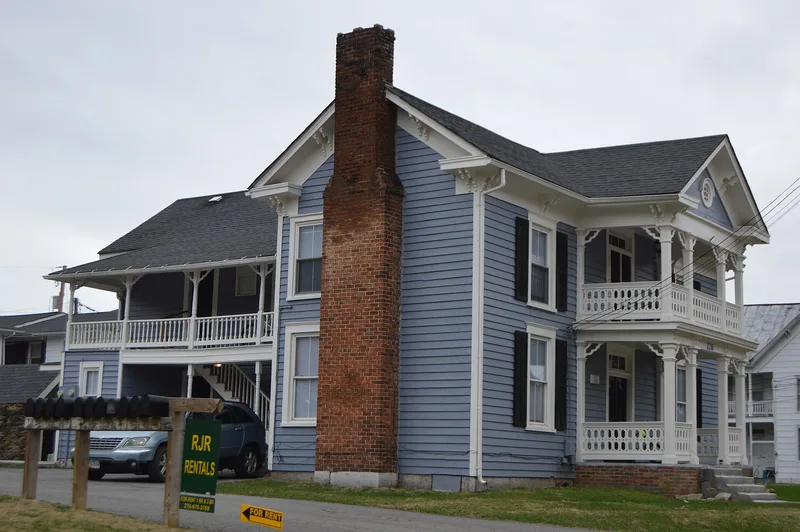
Cedar Bluff's early town center lies along the Old Kentucky Turnpike, near where Indian Creek meets the Clinch River in Tazewell County, Virginia. The district contains 40 contributing and 27 noncontributing resources, mostly houses, churches and institutional buildings dating from the third quarter of the nineteenth century to the third quarter of the twentieth. Notable examples include the Queen Anne-style Baylor House, the Peery House, boyhood home of Governor George C. Peery, and several frame central-passage houses said to have been built by local builder Thomas M. Cubine. Cedar Bluff High School, built in 1906 on College Hill, and the Clinch Valley Roller Mills, first built in the late 1850s, add institutional and industrial character. The turnpike was begun in 1850, and the village grew in the postbellum period as Peery family lots along the road were sold to people who built houses there. The district also includes railroad structures and the McGuire-Peery House setting.
Machine-generated summary. This summary was generated by a language model from the official nomination document and has not been reviewed line by line by an editor. It may contain errors. Check the source document before relying on any detail. Source: nomination document (PDF) · catalog entry. Generated October 2026 (model claude-sonnet-5-5, prompt v1.0-2026-10-29).
| Styles | Greek Revival, Queen Anne, Late Gothic Revival, Bungalow/Craftsman; central-passage, two-room and T plans |
|---|---|
| Areas of significance | Architecture, Education, Politics/Government |
| Acreage | 48 |
| Boundary source | NPS cultural-resource GIS polygon |
| Full listing page | Old Kentucky Turnpike Historic District (property record) |
What listing means for this property
This is a historic district. Buildings within its boundary are either contributing (they add to the district's significance) or non-contributing. Owners of contributing income-producing buildings can claim the 20% federal rehabilitation tax credit; homeowners should look at state credits. National Register districts impose no design review by themselves; a local historic district ordinance, if one exists, does (the difference explained).
General information, not legal or tax advice. Rules change; confirm with your State Historic Preservation Office or a qualified adviser.