Oaks, The

Why it's listed
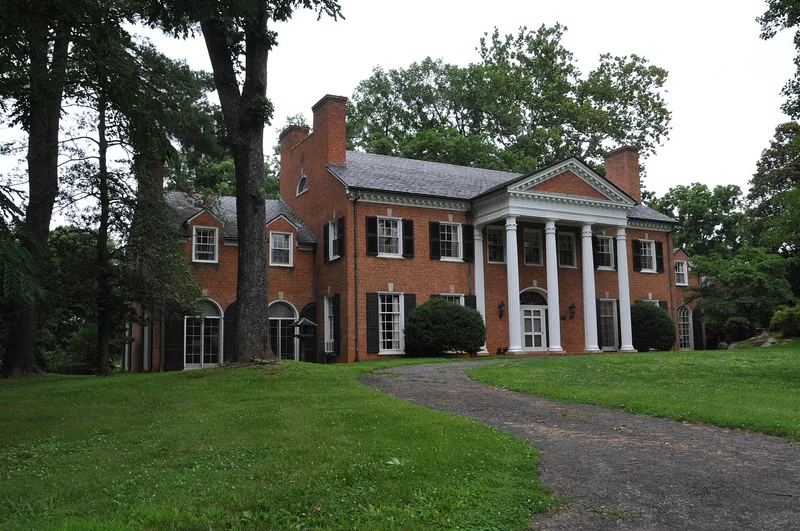
The Oaks is a 151-acre country estate along Springs Road, about three and a half miles southwest of Warrenton in Fauquier County. Its centerpiece is a brick Neoclassical mansion built between 1931 and 1933 to designs by architect W. H. Irwin Fleming, with W. J. Hanback as builder. The house has a pedimented portico with Tower of the Winds columns and rubbed, glazed brick laid in English cross bond. Around it lie a designed landscape with a bowling green, lily pond, ha-ha wall and tree allees, plus a working farm with a tile barn, agent's cottage, greenhouse, log cabin and windmill. Thirteen contributing buildings date from 1928 to 1945. The estate was created by the Rev. Paul Bowden, longtime rector of St. James' Episcopal Church, and his wife Margaret Spilman Bowden. It is recognized for its architecture, landscape design, agricultural use and the site of an 1881 duel, and it has remained in the family's ownership.
Machine-generated summary. This summary was generated by a language model from the official nomination document and has not been reviewed line by line by an editor. It may contain errors. Check the source document before relying on any detail. Source: nomination document (PDF) · catalog entry. Generated October 2026 (model claude-sonnet-5-5, prompt v1.0-2026-10-29).
| Period of significance | 1881; 1928-1951 |
|---|---|
| Styles | Late 19th and 20th Century Revivals - Neo-Classical |
| Areas of significance | Architecture, Landscape Architecture, Agriculture, Politics/Government |
| Acreage | 151.4 |
| Boundary source | NPS cultural-resource GIS polygon |
| Full listing page | Oaks, The (property record) |
What listing means for this property
This is a historic district. Buildings within its boundary are either contributing (they add to the district's significance) or non-contributing. Owners of contributing income-producing buildings can claim the 20% federal rehabilitation tax credit; homeowners should look at state credits. National Register districts impose no design review by themselves; a local historic district ordinance, if one exists, does (the difference explained).
General information, not legal or tax advice. Rules change; confirm with your State Historic Preservation Office or a qualified adviser.