Oaklette Historic District

Why it's listed
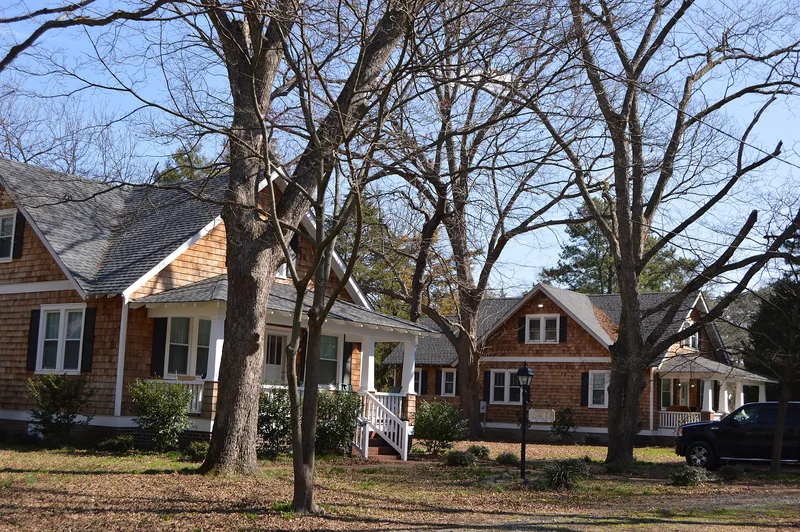
Oaklette is a planned streetcar suburb on a peninsula bounded by Indian River in Chesapeake, Virginia. The land was once the estate of Mathew Hare. His descendants sold a parcel for a Methodist chapel in 1883 and platted the community in 1904, as a streetcar line was being built through the property. Lots were laid out on a gridiron, with larger parcels along the waterfront to maximize saleable water views. By 1905 many inland lots were subdivided into narrower parcels. Most early houses date from 1905 to 1915 and include Colonial Revival dwellings. Craftsman Bungalows followed in the 1920s, and brick ranch houses came after World War II. A Colonna family houseboat, moved inland by a hurricane in 1933, and the remains of the Colonna estate add to the district. The district was listed for its community planning and development significance between 1883 and 1940, and it keeps its early street pattern and character.
Machine-generated summary. This summary was generated by a language model from the official nomination document and has not been reviewed line by line by an editor. It may contain errors. Check the source document before relying on any detail. Source: nomination document (PDF) · catalog entry. Generated October 2026 (model claude-sonnet-5-5, prompt v1.0-2026-10-29).
| Period of significance | 1883 - 1940 |
|---|---|
| Styles | Colonial Revival; Bungalow/Craftsman; Modern Movement |
| Areas of significance | Community Planning and Development |
| Acreage | 75 |
| Boundary source | NPS cultural-resource GIS polygon |
| Full listing page | Oaklette Historic District (property record) |
What listing means for this property
This is a historic district. Buildings within its boundary are either contributing (they add to the district's significance) or non-contributing. Owners of contributing income-producing buildings can claim the 20% federal rehabilitation tax credit; homeowners should look at state credits. National Register districts impose no design review by themselves; a local historic district ordinance, if one exists, does (the difference explained).
General information, not legal or tax advice. Rules change; confirm with your State Historic Preservation Office or a qualified adviser.