Northampton County Courthouse Historic District

Why it's listed
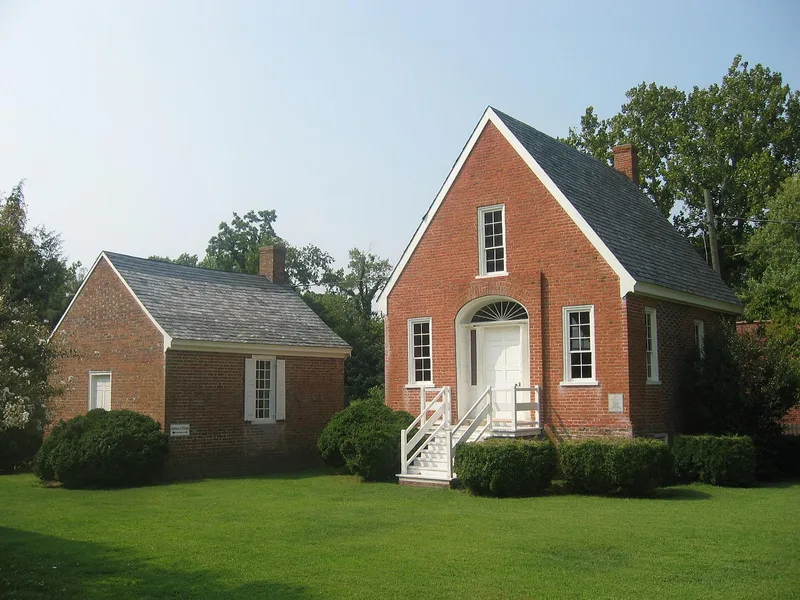
Eastville's court green in Northampton County, Virginia, holds a cluster of government and commercial buildings that has served as the county seat since 1690. The oldest is the brick court house of 1731, built under a contract awarded to John Marshall and moved in 1913 from its original spot to the north edge of the green, with its front wall rebuilt. Nearby stand a mid-eighteenth-century clerk's office with a barrel-vaulted ceiling, a small debtors' prison believed built by William Satchell in 1814, and the Romanesque Revival court house of 1899, the fifth to house county courts. Along the green are lawyers' offices, an early nineteenth-century brick store, and the Eastville Inn, a frame tavern building whose oldest parts probably date from 1780. Together these buildings were recognized as one of Virginia's most complete court house complexes, and for the continuity of county government and records they represent.
Machine-generated summary. This summary was generated by a language model from the official nomination document and has not been reviewed line by line by an editor. It may contain errors. Check the source document before relying on any detail. Source: nomination document (PDF) · catalog entry. Generated October 2026 (model claude-sonnet-5-5, prompt v1.0-2026-10-29).
| Period of significance | 17th through 19th centuries (18th Century and 19th Century boxes marked, along with 17th Century) |
|---|---|
| Styles | Romanesque Revival (1899 court house); colonial brick buildings in Flemish bond; Federal style doorway |
| Areas of significance | Politics/Government, Architecture |
| Acreage | 9 |
| Boundary source | NPS cultural-resource GIS polygon |
| Full listing page | Northampton County Courthouse Historic District (property record) |
What listing means for this property
This is a historic district. Buildings within its boundary are either contributing (they add to the district's significance) or non-contributing. Owners of contributing income-producing buildings can claim the 20% federal rehabilitation tax credit; homeowners should look at state credits. National Register districts impose no design review by themselves; a local historic district ordinance, if one exists, does (the difference explained).
General information, not legal or tax advice. Rules change; confirm with your State Historic Preservation Office or a qualified adviser.