Newtown-Stephensburg Historic District

Why it's listed
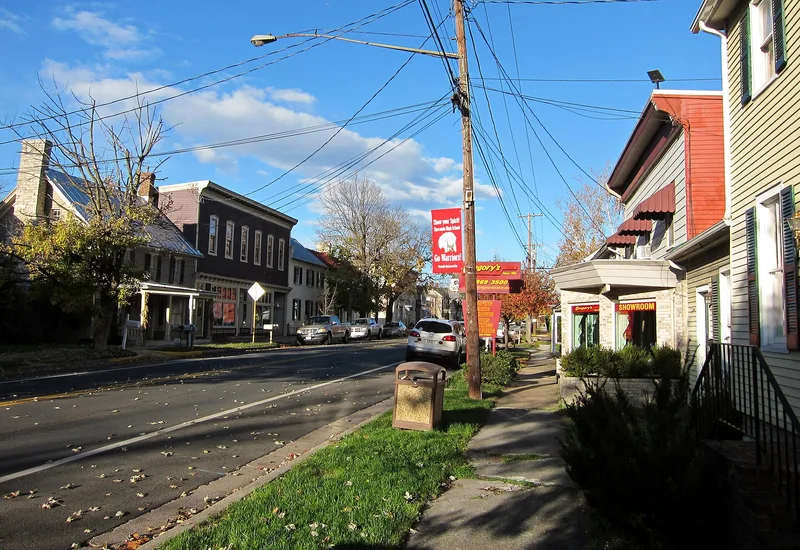
Stephens City, in Frederick County, Virginia, was chartered in 1758 as Stephensburg and is described as the second oldest town in the Shenandoah Valley after Winchester. This historic district covers the core of the original town, centered on Main Street along the Valley Pike. The 1758 grid of half-acre and ten-acre lots is still visible in the street pattern. About 147 contributing buildings and sites remain, including several late-18th-century log dwellings that were later enlarged and given Folk Victorian porches. Other landmarks include an 1819 Federal-style brick tavern, a stone commercial building remodeled in the mid-19th century, Lutheran, Methodist and African American churches, and early cemeteries. The town was settled mainly by Germans, was known for its wagonmakers in the 1830s, and changed hands repeatedly during the Civil War. The district is notable for its high integrity and its range of styles from the 18th to the early 20th century.
Machine-generated summary. This summary was generated by a language model from the official nomination document and has not been reviewed line by line by an editor. It may contain errors. Check the source document before relying on any detail. Source: nomination document (PDF) · catalog entry. Generated October 2026 (model claude-sonnet-5-5, prompt v1.0-2026-10-29).
| Styles | Federal; Greek Revival; Gothic Revival; Italianate; Queen Anne; Colonial Revival; Bungalow/Craftsman; vernacular I-houses; vernacular 18th-century log dwellings with late-19th-century Folk Victorian details |
|---|---|
| Areas of significance | Commerce, Transportation, Architecture |
| Acreage | 65 |
| Boundary source | NPS cultural-resource GIS polygon |
| Full listing page | Newtown-Stephensburg Historic District (property record) |
What listing means for this property
This is a historic district. Buildings within its boundary are either contributing (they add to the district's significance) or non-contributing. Owners of contributing income-producing buildings can claim the 20% federal rehabilitation tax credit; homeowners should look at state credits. National Register districts impose no design review by themselves; a local historic district ordinance, if one exists, does (the difference explained).
General information, not legal or tax advice. Rules change; confirm with your State Historic Preservation Office or a qualified adviser.