Newtown Historic District

Why it's listed
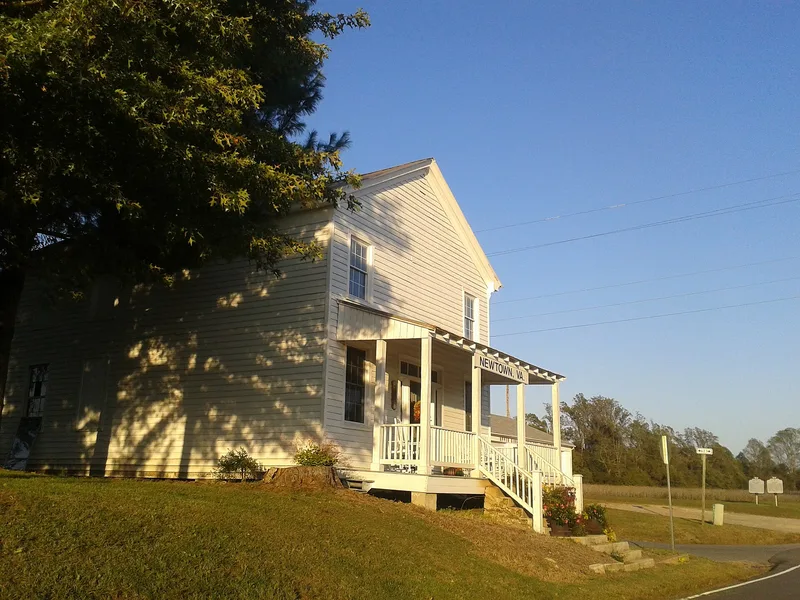
Newtown is a small crossroads village in King and Queen County, Virginia, about forty-five miles northeast of Richmond, where Routes 721 and 625 meet. About ten frame farmhouses, most from the 19th century, sit on large lots among planted fields, and the open farmland is part of the district. The settlement began in the late colonial period around a store and ordinary on the Great Post Road. By 1836 it was the largest village in the county, with stores, a church, tradesmen and a male seminary, and it supported a long run of private academies. In early June 1863 it was the scene of the last tactical action of General George Pickett's division before its march to Gettysburg. Notable buildings include The Hill, from the late 18th century, the Lee Boulware House of about 1823, the Richardson Lumpkin House of about 1839, the Samuel S. Gresham House of about 1845, and Walton's Academy of about 1854.
Machine-generated summary. This summary was generated by a language model from the official nomination document and has not been reviewed line by line by an editor. It may contain errors. Check the source document before relying on any detail. Source: nomination document (PDF) · catalog entry. Generated October 2026 (model claude-sonnet-5-5, prompt v1.0-2026-10-29).
| Styles | Vernacular, with Federal and modified Federal houses |
|---|---|
| Areas of significance | Military, Exploration/Settlement, Architecture |
| Acreage | 46 |
| Boundary source | NPS cultural-resource GIS polygon |
| Full listing page | Newtown Historic District (property record) |
What listing means for this property
This is a historic district. Buildings within its boundary are either contributing (they add to the district's significance) or non-contributing. Owners of contributing income-producing buildings can claim the 20% federal rehabilitation tax credit; homeowners should look at state credits. National Register districts impose no design review by themselves; a local historic district ordinance, if one exists, does (the difference explained).
General information, not legal or tax advice. Rules change; confirm with your State Historic Preservation Office or a qualified adviser.