Mt. Sidney Historic District

Why it's listed
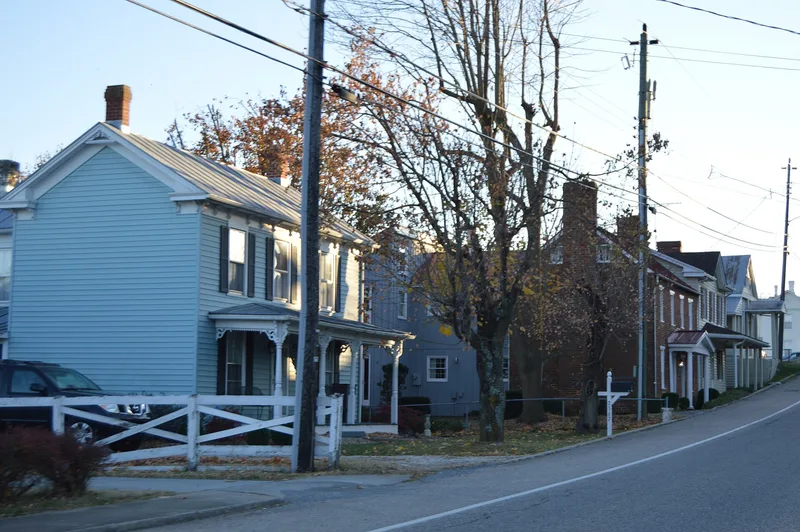
Mt. Sidney is a turnpike village in northern Augusta County, Virginia, about ten miles north of Staunton on the old Valley Turnpike. Laid out in 1826 with long, narrow lots facing the main road, it grew from a few buildings of the 1820s, including a brick tavern and a brick store with Flemish bond brickwork and decorative cornices. Antebellum growth brought frame I-houses with Greek Revival detailing, small log dwellings, shops, a tavern and the first denominational church, along with a pottery whose kiln site lies in the present park. The arrival of the railroad and heavier turnpike traffic spurred late nineteenth-century expansion. New I-houses with front gables and more irregular Victorian-style homes appeared, and the village spread south, where a substantial black community lived, and west, where the white school was built. Today the core remains largely intact, and archaeological sites from the black community survive undisturbed. The district is recognized for its architecture, commerce, transportation and settlement history.
Machine-generated summary. This summary was generated by a language model from the official nomination document and has not been reviewed line by line by an editor. It may contain errors. Check the source document before relying on any detail. Source: nomination document (PDF) · catalog entry. Generated October 2026 (model claude-sonnet-5-5, prompt v1.0-2026-10-29).
| Styles | Early Republic: Federal; Mid-19th Century: Greek Revival; Late Victorian |
|---|---|
| Areas of significance | Architecture, Commerce, Transportation, Exploration/Settlement |
| Acreage | 40 |
| Boundary source | NPS cultural-resource GIS polygon |
| Full listing page | Mt. Sidney Historic District (property record) |
What listing means for this property
This is a historic district. Buildings within its boundary are either contributing (they add to the district's significance) or non-contributing. Owners of contributing income-producing buildings can claim the 20% federal rehabilitation tax credit; homeowners should look at state credits. National Register districts impose no design review by themselves; a local historic district ordinance, if one exists, does (the difference explained).
General information, not legal or tax advice. Rules change; confirm with your State Historic Preservation Office or a qualified adviser.