Mountain Road Historic District (Boundary Increase)

Why it's listed
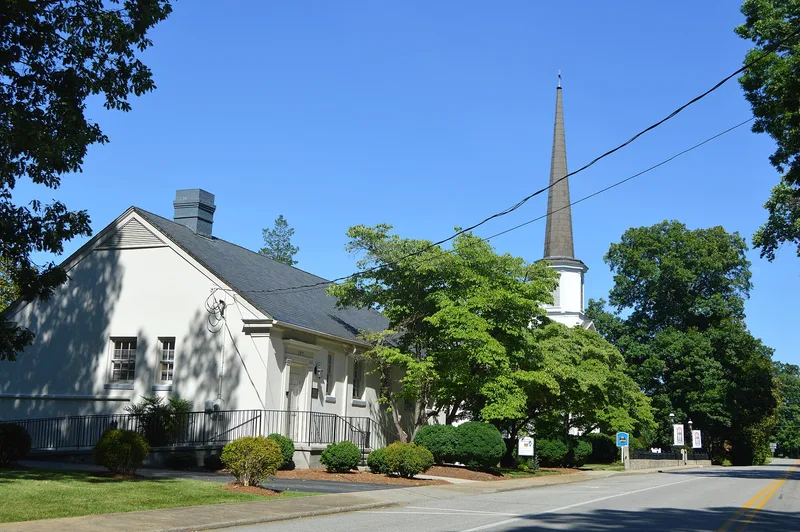
Mountain Road in the town of Halifax, Virginia, is a half-mile stretch of tree-shaded street west of the county courthouse, lined with about thirty buildings. The oldest are the 1828 Masonic Lodge and the 1831 church now used by the Methodist congregation, both late Federal in design. St. John's Episcopal Church followed in 1844, built in Greek Revival style by Dabney Cosby, Jr., who also built three fine brick houses on the road: Magnolia Hill, Grand Oaks and the rectory. His father worked under Thomas Jefferson at the University of Virginia and built the county courthouse. Building paused after the 1850s, then resumed in the 1880s with Queen Anne and Eastlake houses, followed by Colonial Revival and bungalow dwellings in the early 20th century. Large lawns, old trees and shrubs, some planted in the mid-19th century, give the street a park-like setting. The district was recognized for this combination of architecture and preserved landscape.
Machine-generated summary. This summary was generated by a language model from the official nomination document and has not been reviewed line by line by an editor. It may contain errors. Check the source document before relying on any detail. Source: nomination document (PDF). Generated October 2026 (model claude-sonnet-5-5, prompt v1.0-2026-10-29).
| Styles | Late Federal, Greek Revival, Queen Anne, Eastlake, Colonial Revival and Bungalow |
|---|---|
| Areas of significance | Architecture, Education, Community Planning and Development |
| Acreage | 279 |
| Boundary source | NPS cultural-resource GIS polygon |
| Full listing page | Mountain Road Historic District (Boundary Increase) (property record) |
What listing means for this property
This is a historic district. Buildings within its boundary are either contributing (they add to the district's significance) or non-contributing. Owners of contributing income-producing buildings can claim the 20% federal rehabilitation tax credit; homeowners should look at state credits. National Register districts impose no design review by themselves; a local historic district ordinance, if one exists, does (the difference explained).
General information, not legal or tax advice. Rules change; confirm with your State Historic Preservation Office or a qualified adviser.