Morgantown Historic District

The National Park Service has not published a boundary polygon for this district; the map shows the listed properties inside it and the district's reference point.
Why it's listed
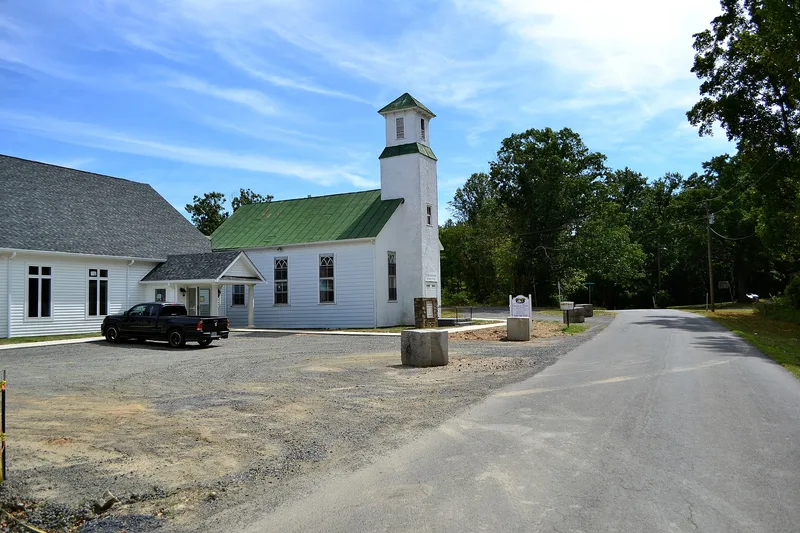
Morgantown is a crossroads hamlet in north central Fauquier County, Virginia, founded by freed people after the Civil War. Land from the estate of William Morgan was deeded to former slaves in the 1870s, and the settlement appears as Morgantown in tax books by 1876. The district holds four dwellings, a church, a school, a meat house, an outbuilding ruin and a separate community cemetery, mostly vernacular buildings dating from about 1890 to 1910. Mount Nebo Baptist Church, built in 1902, sits at its center. The school, built around 1891, served local children until it closed in the mid-1960s, and the cemetery holds close to 100 graves, with the earliest documented stone dated 1880. Its buildings were probably built by community members. The district was listed for its architecture and for its role in African-American ethnic heritage. Along with nearby Ashville, it is described as the best preserved of the rural Black communities that grew in Fauquier County after the war.
Machine-generated summary. This summary was generated by a language model from the official nomination document and has not been reviewed line by line by an editor. It may contain errors. Check the source document before relying on any detail. Source: nomination document (PDF) · catalog entry. Generated October 2026 (model claude-sonnet-5-5, prompt v1.0-2026-10-29).
| Period of significance | 1876-1953 |
|---|---|
| Styles | Vernacular (classified as Other) |
| Areas of significance | Architecture, Black |
| Acreage | 9 |
| Boundary source | not published |
| Full listing page | Morgantown Historic District (property record) |
What listing means for this property
This is a historic district. Buildings within its boundary are either contributing (they add to the district's significance) or non-contributing. Owners of contributing income-producing buildings can claim the 20% federal rehabilitation tax credit; homeowners should look at state credits. National Register districts impose no design review by themselves; a local historic district ordinance, if one exists, does (the difference explained).
General information, not legal or tax advice. Rules change; confirm with your State Historic Preservation Office or a qualified adviser.