Montpelier Historic District
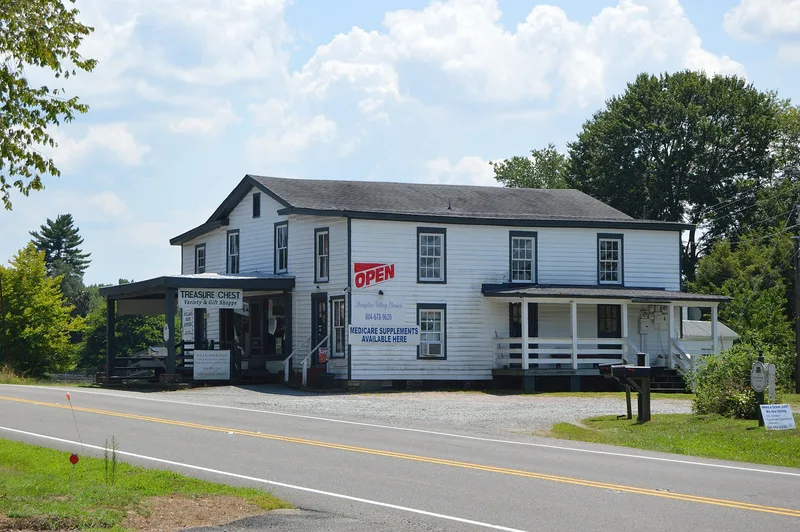

Why it's listed
Montpelier Historic District is a linear village strung along Mountain Road in western Hanover County, Virginia, about 20 miles west of Richmond. It began around Sycamore Tavern, a 1732 stagecoach stop on the Richmond to Charlottesville road, the only 18th-century building left in the district. After the Civil War, farming difficulties pushed local families toward timber, and the Jones family built lumber wealth that helped the village prosper. The district holds 46 contributing resources, including an 1876 school, the 1882 Church of Our Savior, a Grange Hall, general stores, Victorian houses and a group of Colonial Revival brick homes from the 1930s. The 1929 Montpelier School, designed by L. P. Hartsook, later became an arts and education center. Two buildings from after 1960 do not contribute. The district was recognized for its architecture and its role in the commerce, education and religious life of a rural community from 1732 to 1950.
Machine-generated summary. This summary was generated by a language model from the official nomination document and has not been reviewed line by line by an editor. It may contain errors. Check the source document before relying on any detail. Source: nomination document (PDF) · catalog entry. Generated October 2026 (model claude-sonnet-5-5, prompt v1.0-2026-10-29).
| Period of significance | 1732-1950 |
|---|---|
| Styles | Colonial; Colonial Revival; Late 19th and Early 20th Century American Movements |
| Areas of significance | Architecture, Commerce, Education, Religion |
| Acreage | 152.8 |
| Boundary source | NPS cultural-resource GIS polygon |
| Full listing page | Montpelier Historic District (property record) |
What listing means for this property
This is a historic district. Buildings within its boundary are either contributing (they add to the district's significance) or non-contributing. Owners of contributing income-producing buildings can claim the 20% federal rehabilitation tax credit; homeowners should look at state credits. National Register districts impose no design review by themselves; a local historic district ordinance, if one exists, does (the difference explained).
General information, not legal or tax advice. Rules change; confirm with your State Historic Preservation Office or a qualified adviser.