Monroe Courts Historic District

Why it's listed
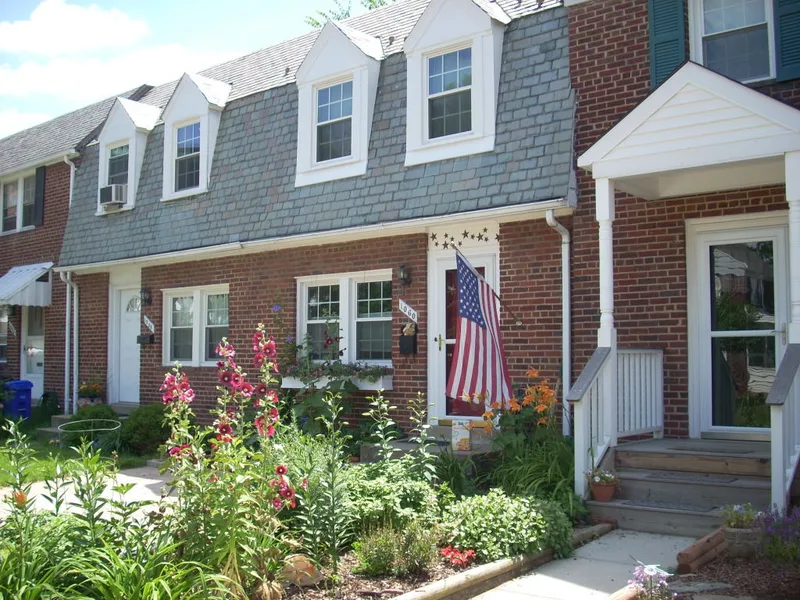
Monroe Courts is a group of 39 two-story brick row houses arranged in four rows along North Nelson and North Monroe streets in Arlington, Virginia. Built in 1938 for middle-class commuters to Washington, D.C., the houses were designed by architect John Cobb for developer Clarence W. Gosnell in a restrained Colonial Revival style. Variety comes from alternating front-gable, false gambrel and false side-gable slate roofs, while door surrounds and symmetrical facades supply the style's character. Some rows have pedimented center houses with blind fanlights. The development matters because row houses were unusual in a suburb of mostly freestanding homes, and Arlington County began prohibiting them through zoning in June 1938, soon after permits were issued here. It remains one of the few such developments in the county. Replacement windows, awnings and rear additions have been made over time, but the original form, scale and materials are largely preserved. Three modern sheds are the only noncontributing resources.
Machine-generated summary. This summary was generated by a language model from the official nomination document and has not been reviewed line by line by an editor. It may contain errors. Check the source document before relying on any detail. Source: nomination document (PDF) · catalog entry. Generated October 2026 (model claude-sonnet-5-5, prompt v1.0-2026-10-29).
| Styles | Late 19th and 20th Century Revivals/Colonial Revival |
|---|---|
| Areas of significance | Architecture, Community Planning and Development |
| Acreage | 2.4 |
| Boundary source | NPS cultural-resource GIS polygon |
| Full listing page | Monroe Courts Historic District (property record) |
What listing means for this property
This is a historic district. Buildings within its boundary are either contributing (they add to the district's significance) or non-contributing. Owners of contributing income-producing buildings can claim the 20% federal rehabilitation tax credit; homeowners should look at state credits. National Register districts impose no design review by themselves; a local historic district ordinance, if one exists, does (the difference explained).
General information, not legal or tax advice. Rules change; confirm with your State Historic Preservation Office or a qualified adviser.