Millwood Commercial Historic District

The National Park Service has not published a boundary polygon for this district; the map shows the listed properties inside it and the district's reference point.
Why it's listed
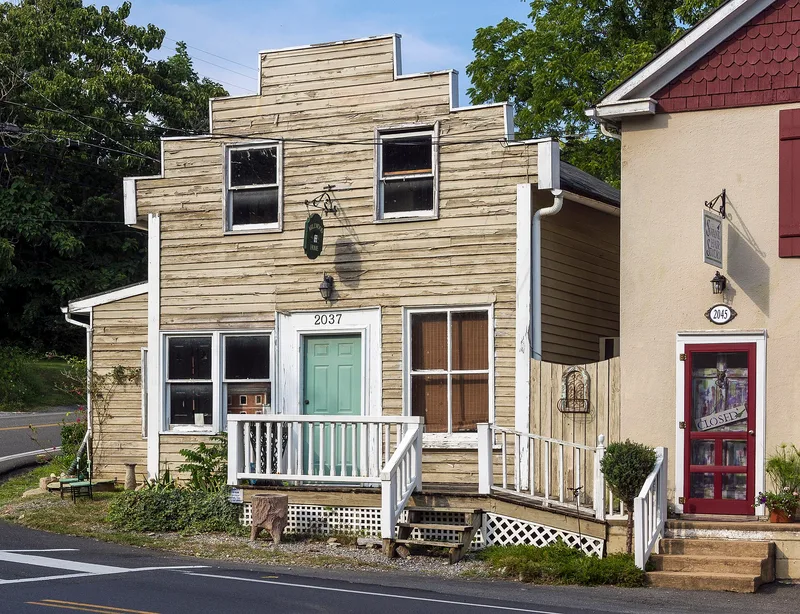
Millwood Commercial Historic District covers the commercial core of a small village in Clarke County, Virginia, in the Lower Shenandoah Valley. At its center is the Burwell-Morgan Mill, built between 1782 and 1785 by Nathaniel Burwell and Revolutionary War hero General Daniel Morgan, and now restored as a working museum. Around it stand ten contributing buildings dating from about 1800 to 1930: a log tannery warehouse later used as a tollhouse, a log liquor store house from 1805, the miller's house, an 1830s brick store that still operates, and several shops, a former post office, a car showroom and a service station. The village grew as a market center for surrounding farmland, helped by Spout Run, nearby roads and the Shenandoah River, but declined after the Civil War and the railroad bypassing it in 1880. Little new construction has occurred since about 1930, so the area keeps a cohesive commercial character.
Machine-generated summary. This summary was generated by a language model from the official nomination document and has not been reviewed line by line by an editor. It may contain errors. Check the source document before relying on any detail. Source: nomination document (PDF) · catalog entry. Generated October 2026 (model claude-sonnet-5-5, prompt v1.0-2026-10-29).
| Styles | Other: vernacular, commercial |
|---|---|
| Areas of significance | Architecture, Commerce |
| Acreage | 4.3 |
| Boundary source | not published |
| Full listing page | Millwood Commercial Historic District (property record) |
What listing means for this property
This is a historic district. Buildings within its boundary are either contributing (they add to the district's significance) or non-contributing. Owners of contributing income-producing buildings can claim the 20% federal rehabilitation tax credit; homeowners should look at state credits. National Register districts impose no design review by themselves; a local historic district ordinance, if one exists, does (the difference explained).
General information, not legal or tax advice. Rules change; confirm with your State Historic Preservation Office or a qualified adviser.