Martinsville Historic District (Additional Documentation)

Why it's listed
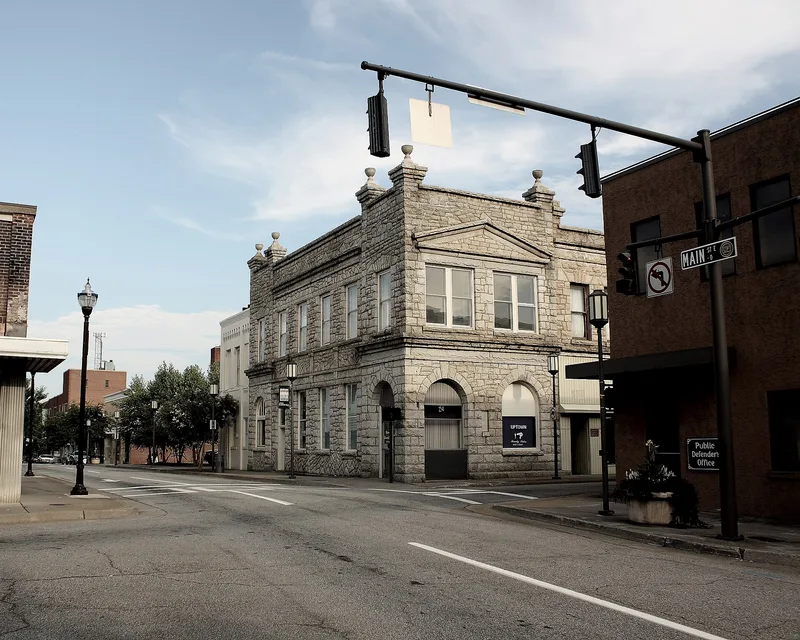
Martinsville's historic core is a roughly 45-acre linear district stretching along Church, Main and Fayette streets around the Henry County Courthouse. It holds 119 buildings, one site and four objects, of which 98 contribute to its character. Development began when the town became county seat in 1791, then accelerated after the railroads arrived and tobacco, furniture and textile industries grew. The 1920s brought a boom of larger brick buildings, including the Hotel Henry, the Thomas Jefferson Hotel, the Chief Tassel Building, the Knights of Pythias Building and the First National Bank. The district also includes a Masonic Temple, a 1939 post office, a Methodist church, department stores, gas stations, auto showrooms and warehouses. Styles range from Romanesque Revival and Classical Revival to Art Deco. Although many storefronts have been altered, upper floors largely keep their integrity, and the district still functions as the city's commercial and government center.
Machine-generated summary. This summary was generated by a language model from the official nomination document and has not been reviewed line by line by an editor. It may contain errors. Check the source document before relying on any detail. Source: nomination document (PDF) · catalog entry. Generated October 2026 (model claude-sonnet-5-5, prompt v1.0-2026-10-29).
| Styles | Federal, Romanesque Revival, Colonial Revival, Classical Revival, Commercial, International, Art Deco |
|---|---|
| Areas of significance | Architecture, Commerce, Industry, Politics/Government, Transportation, Ethnic Heritage-Other-Ethnic, Social History |
| Acreage | 38.81 |
| Boundary source | NPS cultural-resource GIS polygon |
| Full listing page | Martinsville Historic District (Additional Documentation) (property record) |
What listing means for this property
This is a historic district. Buildings within its boundary are either contributing (they add to the district's significance) or non-contributing. Owners of contributing income-producing buildings can claim the 20% federal rehabilitation tax credit; homeowners should look at state credits. National Register districts impose no design review by themselves; a local historic district ordinance, if one exists, does (the difference explained).
General information, not legal or tax advice. Rules change; confirm with your State Historic Preservation Office or a qualified adviser.