Maiden Spring

Why it's listed
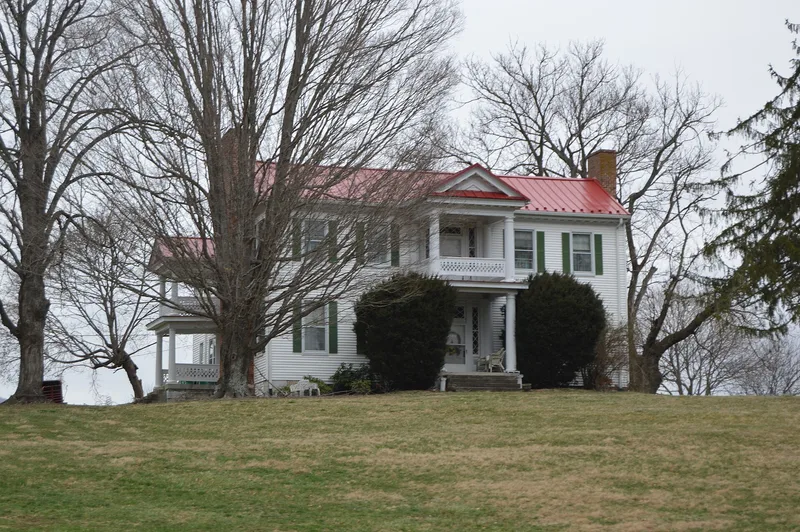
Maiden Spring is a working farm of about 600 acres in Bowen's Cove, a valley in rugged Tazewell County, Virginia. A large spring flows from a cave mouth there and forms a creek. On a hill near the valley's center stands a two-story, five-bay frame house with a pedimented two-story portico and a limestone foundation. Family tradition dates the main block to 1838, added by Rees Tate Bowen to an older section that became the rear ell. Around it are a meat house, summer kitchen, a building identified as a slave house, horse and stock barns, a granary, a cemetery and a schoolhouse. The Bowens were among the county's wealthiest landowners in 1850, with large cattle and sheep herds. Rees Tate Bowen served in the state legislature and in Congress. In 1862 Confederate troops camped on the farm, and in 1864 Union troops camped nearby, leaving marks that remain in the house.
Machine-generated summary. This summary was generated by a language model from the official nomination document and has not been reviewed line by line by an editor. It may contain errors. Check the source document before relying on any detail. Source: nomination document (PDF) · catalog entry. Generated October 2026 (model claude-sonnet-5-5, prompt v1.0-2026-10-29).
| Styles | Other: Central-passage-plan |
|---|---|
| Areas of significance | Agriculture, Architecture |
| Acreage | 600 |
| Boundary source | NPS cultural-resource GIS polygon |
| Full listing page | Maiden Spring (property record) |
What listing means for this property
This is a historic district. Buildings within its boundary are either contributing (they add to the district's significance) or non-contributing. Owners of contributing income-producing buildings can claim the 20% federal rehabilitation tax credit; homeowners should look at state credits. National Register districts impose no design review by themselves; a local historic district ordinance, if one exists, does (the difference explained).
General information, not legal or tax advice. Rules change; confirm with your State Historic Preservation Office or a qualified adviser.