Lovettsville Historic District

Why it's listed
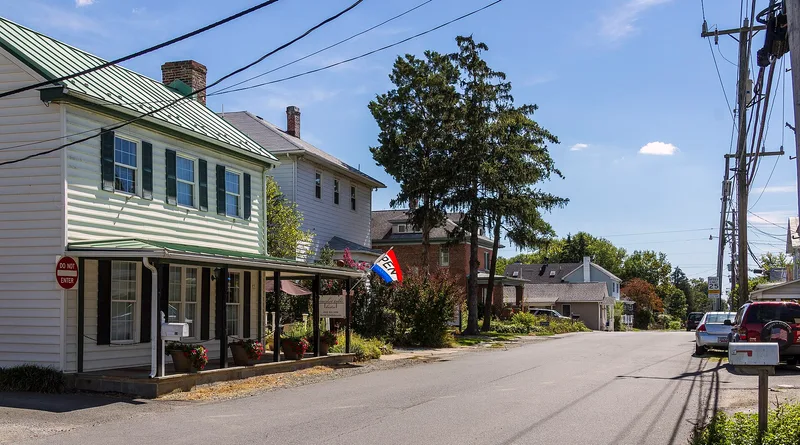
Lovettsville Historic District covers the old center of a small town in northwestern Loudoun County, Virginia, about two and a half miles south of the Potomac River. Known first as the German Settlement, the town was established in 1820 and grew as a residential, religious and commercial hub for nearby farms. The district takes in roughly 90 acres along East Pennsylvania Avenue, East Broad Way and South Loudoun Street, along with cemeteries and a church set apart to the southeast. Most buildings are houses and their outbuildings, mainly vernacular forms such as I-houses, with Federal, Queen Anne, Craftsman and Minimal Traditional examples. Eight commercial buildings, three churches, five cemeteries and former schools and social halls add variety. More than 60 percent of the historic buildings date from 1880 to 1930. Very little modern construction has occurred inside the boundaries, giving the area strong visual cohesion and integrity. The earliest legible gravestone, from 1770, marks the start of its documented history.
Machine-generated summary. This summary was generated by a language model from the official nomination document and has not been reviewed line by line by an editor. It may contain errors. Check the source document before relying on any detail. Source: nomination document (PDF) · catalog entry. Generated October 2026 (model claude-sonnet-5-5, prompt v1.0-2026-10-29).
| Styles | Late Victorian (Queen Anne, Italianate, Romanesque), Federal, Bungalow/Craftsman, Folk Victorian, Minimal Traditional |
|---|---|
| Areas of significance | Architecture, Exploration/Settlement, Commerce, Black, European, Politics/Government |
| Acreage | 90 |
| Boundary source | NPS cultural-resource GIS polygon |
| Full listing page | Lovettsville Historic District (property record) |
What listing means for this property
This is a historic district. Buildings within its boundary are either contributing (they add to the district's significance) or non-contributing. Owners of contributing income-producing buildings can claim the 20% federal rehabilitation tax credit; homeowners should look at state credits. National Register districts impose no design review by themselves; a local historic district ordinance, if one exists, does (the difference explained).
General information, not legal or tax advice. Rules change; confirm with your State Historic Preservation Office or a qualified adviser.