Lawn, The

Why it's listed
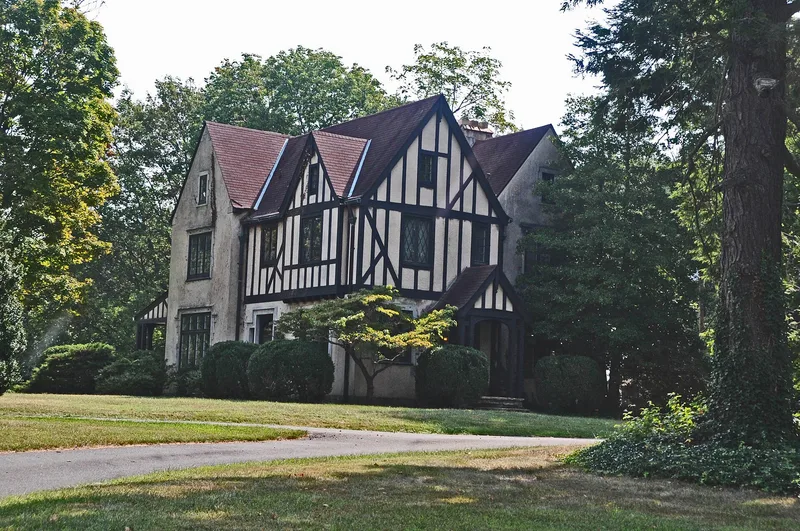
The Lawn is a country estate at Greenwich, in western Prince William County, Virginia. Charles Green, an English-born cotton merchant from Savannah, bought the land in 1855 and built a board-and-batten Carpenter Gothic mansion, finished around 1861, with matching outbuildings set in a park-like lawn. The complex struck one Civil War visitor as the strangest house in Virginia. After the main house burned, Green's son-in-law William MacKall hired the Washington firm A. B. Mullett and Co., which designed a Tudor Revival replacement completed in 1926 on the original foundation. Surviving outbuildings include a Gothic Revival schoolhouse, a stone dairy, a smokehouse, a root cellar, a tenant house and a barn. The estate is notable as the only surviving Gothic Revival farm complex of its kind in the county. It also has a literary link, since Green's grandson, the novelist Julian Green, visited and set a novel there.
Machine-generated summary. This summary was generated by a language model from the official nomination document and has not been reviewed line by line by an editor. It may contain errors. Check the source document before relying on any detail. Source: nomination document (PDF) · catalog entry. Generated October 2026 (model claude-sonnet-5-5, prompt v1.0-2026-10-29).
| Period of significance | 1850-1926 |
|---|---|
| Styles | Mid-Nineteenth Century/Gothic Revival; Twentieth Century Revivals/Tudor Revival |
| Areas of significance | Architecture |
| Acreage | 29 |
| Boundary source | NPS cultural-resource GIS polygon |
| Full listing page | Lawn, The (property record) |
What listing means for this property
This is a historic district. Buildings within its boundary are either contributing (they add to the district's significance) or non-contributing. Owners of contributing income-producing buildings can claim the 20% federal rehabilitation tax credit; homeowners should look at state credits. National Register districts impose no design review by themselves; a local historic district ordinance, if one exists, does (the difference explained).
General information, not legal or tax advice. Rules change; confirm with your State Historic Preservation Office or a qualified adviser.