Langley Fork Historic District

Why it's listed
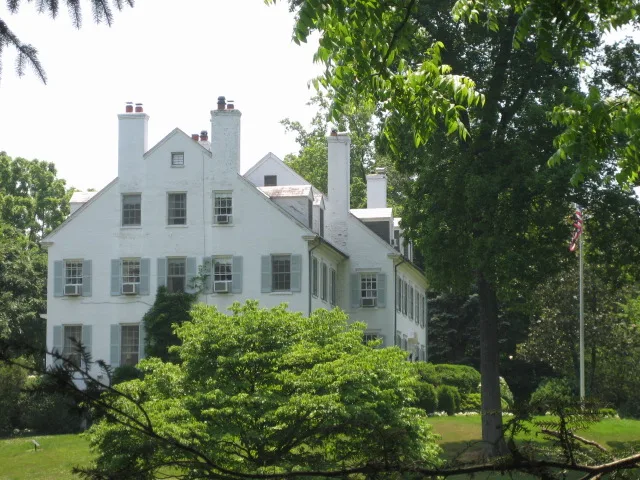
Langley Fork is a small cluster of historic buildings where Georgetown Pike meets Old Chain Bridge Road in Fairfax County, Virginia. The district covers roughly 37 acres and holds thirteen structures, six of which form its core: Langley Ordinary, the Langley Toll House, Gunnell's Chapel, the Langley Friends Meeting House, the Mackall House and Hickory Hill. Most are frame or masonry buildings from the mid-19th century. The area began as the crossing of two colonial-era roads on land granted to Thomas Lee, who named it Langley. In the 19th century it served as a turnpike junction. During the Civil War, Langley Ordinary became the headquarters of Union General McCall, and it was also used as a hospital. Hickory Hill later became well known as a Kennedy family home. Residents twice acted to protect the area's character, helping redirect a highway widening plan in the early 1960s and winning Virginia Byway designation for Georgetown Pike in 1974. The road layout and building cluster shown on an 1878 atlas remain largely intact.
Machine-generated summary. This summary was generated by a language model from the official nomination document and has not been reviewed line by line by an editor. It may contain errors. Check the source document before relying on any detail. Source: nomination document (PDF) · catalog entry. Generated October 2026 (model claude-sonnet-5-5, prompt v1.0-2026-10-29).
| Areas of significance | Transportation, Literature, Education, Exploration/Settlement, Politics/Government, Architecture, Religion |
|---|---|
| Acreage | 37 |
| Boundary source | NPS cultural-resource GIS polygon |
| Full listing page | Langley Fork Historic District (property record) |
What listing means for this property
This is a historic district. Buildings within its boundary are either contributing (they add to the district's significance) or non-contributing. Owners of contributing income-producing buildings can claim the 20% federal rehabilitation tax credit; homeowners should look at state credits. National Register districts impose no design review by themselves; a local historic district ordinance, if one exists, does (the difference explained).
General information, not legal or tax advice. Rules change; confirm with your State Historic Preservation Office or a qualified adviser.