Kentland Farm Historic and Archeological District

Why it's listed
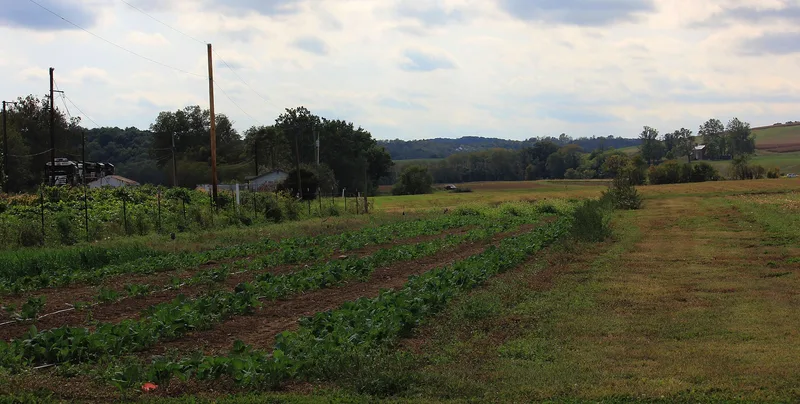
Kentland Farm is a 350-acre district on the New River in northwestern Montgomery County, Virginia, reached from the end of Va. Rt. 623. Its centerpiece is Kentland, a two-story, five-bay Flemish-bond brick house built in 1834-35, with a central-passage plan, a rear ell, a limestone foundation and detailed Federal and Greek Revival woodwork, including carved mantels and a three-run stair. Nearby are a hexagonal brick meat house, an altered antebellum frame dwelling, a mid-nineteenth-century barn and corncrib, a mill and the Kent-Cowan cemetery. The district also covers Buchanans Bottom, an early patented tract, and two early fords. Thirteen archaeological sites have been recorded. Five are Late Woodland Native American sites, among them the Whitethorne site, a well-preserved village with good horizontal and vertical integrity. Because comparable villages in the county have been destroyed, this site is considered important for regional study. Other sites relate to nineteenth-century plantation life and early transportation routes.
Machine-generated summary. This summary was generated by a language model from the official nomination document and has not been reviewed line by line by an editor. It may contain errors. Check the source document before relying on any detail. Source: nomination document (PDF) · catalog entry. Generated October 2026 (model claude-sonnet-5-5, prompt v1.0-2026-10-29).
| Styles | Early Republic: Federal; Mid-19th Century: Greek Revival |
|---|---|
| Areas of significance | Industry, Prehistoric, Historic - Non-Aboriginal, Agriculture, Transportation, Exploration/Settlement, Architecture |
| Acreage | 350 |
| Boundary source | NPS cultural-resource GIS polygon |
| Full listing page | Kentland Farm Historic and Archeological District (property record) |
What listing means for this property
This is a historic district. Buildings within its boundary are either contributing (they add to the district's significance) or non-contributing. Owners of contributing income-producing buildings can claim the 20% federal rehabilitation tax credit; homeowners should look at state credits. National Register districts impose no design review by themselves; a local historic district ordinance, if one exists, does (the difference explained).
General information, not legal or tax advice. Rules change; confirm with your State Historic Preservation Office or a qualified adviser.