Irvington

Why it's listed
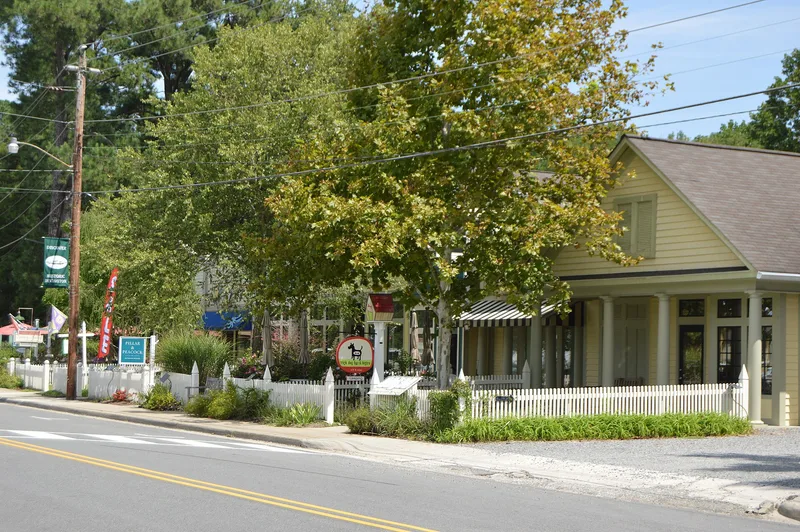
Irvington is a waterside village in southern Lancaster County, Virginia, spread across two peninsulas between Carters Creek, the Eastern Branch and the Rappahannock River. The historic district takes in the village proper, which is more commercial, and West Irvington, which holds most of the houses and a few seafood-related buildings. The oldest dwelling is Wilder's Grant, built about 1740. Most other buildings are wood-frame houses from the 1840s through the mid-20th century, showing Greek Revival, Italianate, Queen Anne, Colonial Revival and bungalow styles. Some houses were built from prefabricated materials made in Baltimore and shipped by steamboat. The community began as a steamboat wharf known as Carters Creek and was renamed Irvington in 1891. Roads were poor, so travel long depended on boats, and paved links to nearby towns came only in the early 20th century. The district is recognized for its maritime and community development history and for its architecture, with a period of significance from about 1740 to 1947.
Machine-generated summary. This summary was generated by a language model from the official nomination document and has not been reviewed line by line by an editor. It may contain errors. Check the source document before relying on any detail. Source: nomination document (PDF) · catalog entry. Generated October 2026 (model claude-sonnet-5-5, prompt v1.0-2026-10-29).
| Period of significance | 1740-1947 |
|---|---|
| Styles | Colonial; Greek Revival; Gothic Revival; Italianate; Queen Anne; Colonial Revival; Classical Revival; Commercial style; Bungalow/Craftsman; Moderne |
| Areas of significance | Architecture, Community Planning and Development, Maritime History |
| Acreage | 1107.2 |
| Boundary source | NPS cultural-resource GIS polygon |
| Full listing page | Irvington (property record) |
What listing means for this property
This is a historic district. Buildings within its boundary are either contributing (they add to the district's significance) or non-contributing. Owners of contributing income-producing buildings can claim the 20% federal rehabilitation tax credit; homeowners should look at state credits. National Register districts impose no design review by themselves; a local historic district ordinance, if one exists, does (the difference explained).
General information, not legal or tax advice. Rules change; confirm with your State Historic Preservation Office or a qualified adviser.