Hoffman Round Barn

Why it's listed
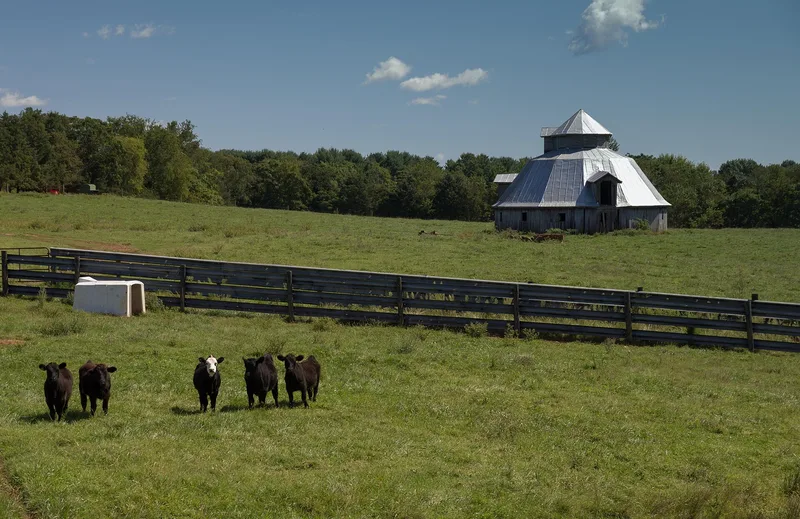
Rising from a ridgeline pasture east of Wolftown, this twelve-sided round barn is a landmark of Madison County's farmland. Built in 1913 by local carpenter Haywood Montebello "Tiny" Dawson for farm owner T.M. Hoffman, it has post-and-beam framing, a mansard-like standing-seam metal roof, three hay-door dormers and a wooden center silo. Dawson reportedly accepted payment in trade from the flour mill over time. It is one of three nearly identical barns he built, and the only known round barns in Madison and Greene counties. The surrounding farm descends from a 1727 land grant to John Rucker. It includes a family cemetery with graves dating from 1781, a 1941 Colonial Revival farmhouse and a spring box. The farm is still worked by descendants of the families in its chain of title. It is recognized locally for its agricultural history and its vernacular response to the national round barn movement.
Machine-generated summary. This summary was generated by a language model from the official nomination document and has not been reviewed line by line by an editor. It may contain errors. Check the source document before relying on any detail. Source: nomination document (PDF) · catalog entry. Generated October 2026 (model claude-sonnet-5-5, prompt v1.0-2026-10-29).
| Period of significance | circa 1781-1941 |
|---|---|
| Styles | Late 19th and early 20th Century American Movements: Round Barn |
| Areas of significance | Agriculture, Architecture |
| Acreage | 148.7 |
| Boundary source | NPS cultural-resource GIS polygon |
| Full listing page | Hoffman Round Barn (property record) |
What listing means for this property
This is a historic district. Buildings within its boundary are either contributing (they add to the district's significance) or non-contributing. Owners of contributing income-producing buildings can claim the 20% federal rehabilitation tax credit; homeowners should look at state credits. National Register districts impose no design review by themselves; a local historic district ordinance, if one exists, does (the difference explained).
General information, not legal or tax advice. Rules change; confirm with your State Historic Preservation Office or a qualified adviser.