Hillsville Historic District

The National Park Service has not published a boundary polygon for this district; the map shows the listed properties inside it and the district's reference point.
Why it's listed
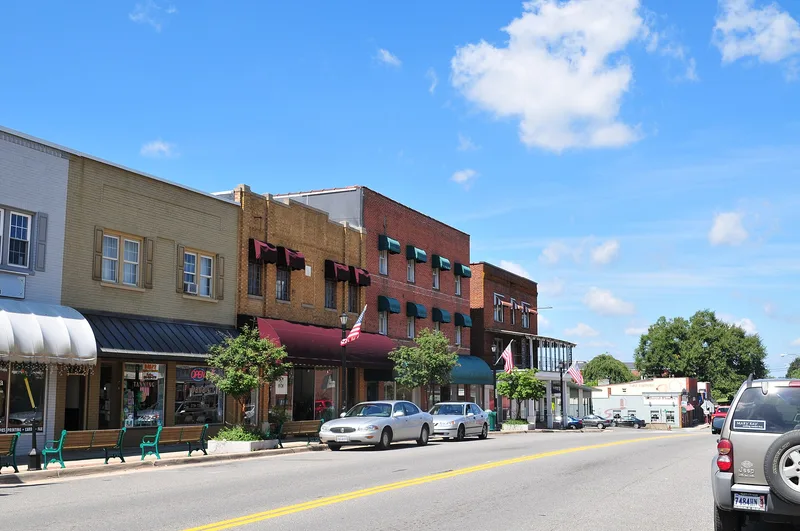
Hillsville's historic district covers about five acres of Main Street (US Route 52) in the Carroll County seat in southwest Virginia. Its buildings date from 1857 to 1951 and include government, financial and commercial structures arranged around the courthouse. The 1875 brick courthouse, built under Colonel Ira Blair Coltrane, combines an arcaded plan with a temple-front portico, a pairing described as unique among Virginia courthouses. The 1857 Carter Building was later remodeled by capitalist George L. Carter, and the 1907 Carroll County Bank reflects early local prosperity. After a 1931 fire, much of the west side of Main Street was rebuilt in brick, producing two- and three-story storefronts, including an Art Deco lodge building. The Hillsville Diner, a converted streetcar probably built around 1936, is noted as a rare survivor. The district has 16 contributing buildings and a Confederate memorial statue, and none are noncontributing. It was recognized for politics and government, commerce, and architecture.
Machine-generated summary. This summary was generated by a language model from the official nomination document and has not been reviewed line by line by an editor. It may contain errors. Check the source document before relying on any detail. Source: nomination document (PDF) · catalog entry. Generated October 2026 (model claude-sonnet-5-5, prompt v1.0-2026-10-29).
| Period of significance | 1857-1951 |
|---|---|
| Styles | Classical Revival, Art Deco, Commercial |
| Areas of significance | Politics/Government, Commerce, Architecture |
| Acreage | 5 |
| Boundary source | not published |
| Full listing page | Hillsville Historic District (property record) |
What listing means for this property
This is a historic district. Buildings within its boundary are either contributing (they add to the district's significance) or non-contributing. Owners of contributing income-producing buildings can claim the 20% federal rehabilitation tax credit; homeowners should look at state credits. National Register districts impose no design review by themselves; a local historic district ordinance, if one exists, does (the difference explained).
General information, not legal or tax advice. Rules change; confirm with your State Historic Preservation Office or a qualified adviser.