Hillsboro Historic District

Why it's listed
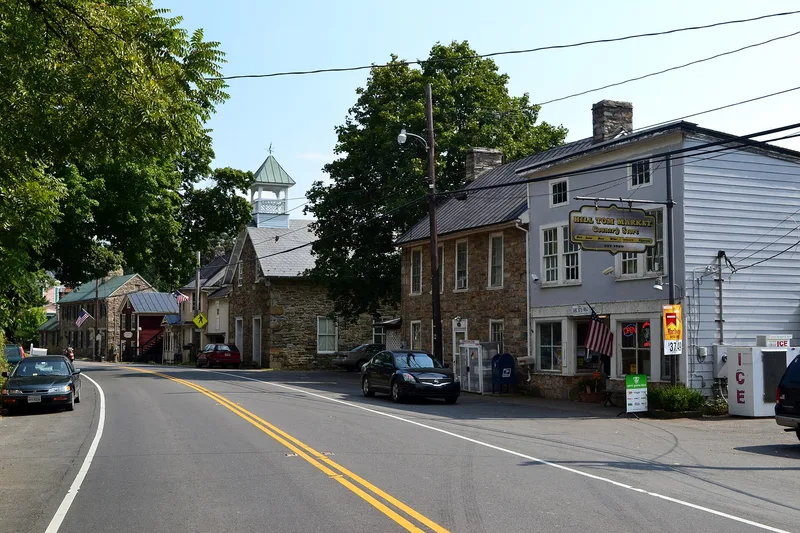
Hillsboro is a small linear town in a gap of the Short Hills at the base of the Blue Ridge, strung along Route 9 in Loudoun County, Virginia. Settled by Quakers from Bucks County, Pennsylvania, in the later 18th century, it was legally established in 1802 and grew along a minor trade route between Leesburg and what is now Charles Town, West Virginia. Its 43 buildings, 21 of them predating 1835, are largely built of local field stone, which gives disparate buildings a shared color and texture. Town trustees skipped a gridiron plan, leaving narrow, deep lots and an informal streetscape. Victorian porches and frame additions were later layered onto early stone houses. By 1835 the town held mills, stores, a tavern, an academy and many tradesmen, serving nearby farms. Troops passed through during the Civil War. The district was recognized as a well-preserved example of an early linear Virginia town.
Machine-generated summary. This summary was generated by a language model from the official nomination document and has not been reviewed line by line by an editor. It may contain errors. Check the source document before relying on any detail. Source: nomination document (PDF) · catalog entry. Generated October 2026 (model claude-sonnet-5-5, prompt v1.0-2026-10-29).
| Period of significance | 1800-1899 |
|---|---|
| Styles | Vernacular with Federal details; Victorian additions (Eastlake, Italianate, Queen Anne) and Colonial Revival |
| Areas of significance | Community Planning and Development, Commerce, Agriculture, Architecture |
| Acreage | 60 |
| Boundary source | NPS cultural-resource GIS polygon |
| Full listing page | Hillsboro Historic District (property record) |
What listing means for this property
This is a historic district. Buildings within its boundary are either contributing (they add to the district's significance) or non-contributing. Owners of contributing income-producing buildings can claim the 20% federal rehabilitation tax credit; homeowners should look at state credits. National Register districts impose no design review by themselves; a local historic district ordinance, if one exists, does (the difference explained).
General information, not legal or tax advice. Rules change; confirm with your State Historic Preservation Office or a qualified adviser.