Hebrew Cemetery

The National Park Service has not published a boundary polygon for this district; the map shows the listed properties inside it and the district's reference point.
Why it's listed
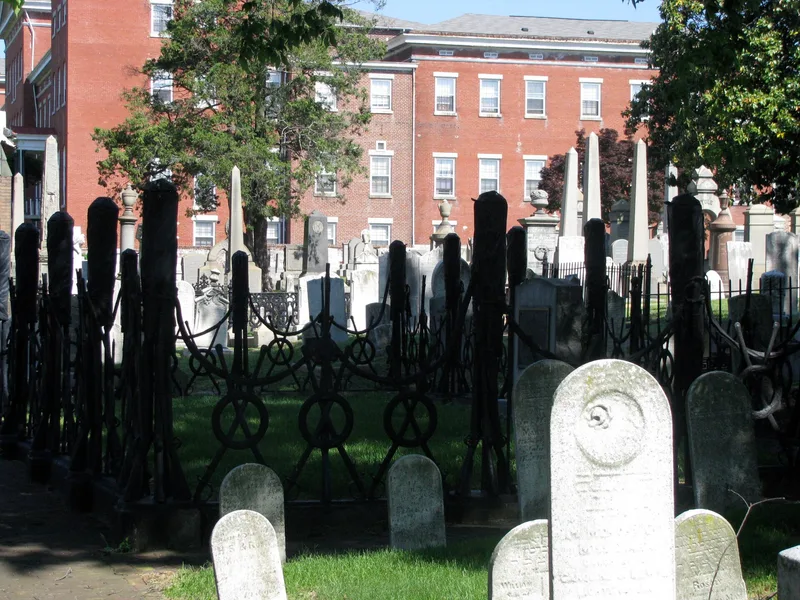
Hebrew Cemetery occupies about 8.4 acres on Shockoe Hill in Richmond, Virginia, beside the 1861 Alms House and Shockoe Cemetery. Founded in 1816 and expanded several times, most recently in 1998, it holds about 2,600 burials laid out in a block and grid plan. Early sandstone markers are simple and carry Hebrew and English inscriptions, reflecting the Jewish belief that all are equal in death. Later monuments add Victorian symbols such as ivy, urns and tree forms, alongside Jewish emblems like the shofar and the Levite water jug. A Romanesque-style brick chapel from about 1898 replaced an earlier preparation house. A section enclosed by a distinctive iron fence holds thirty Jewish Confederate soldiers re-interred in 1866. The cemetery is described as the oldest active Jewish cemetery in continuous use in the South. Many of Richmond's Jewish merchants, civic leaders and rabbis are buried there, and the grounds remain in use.
Machine-generated summary. This summary was generated by a language model from the official nomination document and has not been reviewed line by line by an editor. It may contain errors. Check the source document before relying on any detail. Source: nomination document (PDF) · catalog entry. Generated October 2026 (model claude-sonnet-5-5, prompt v1.0-2026-10-29).
| Period of significance | 1816-1956 |
|---|---|
| Styles | Romanesque Revival (building) |
| Areas of significance | Religion, Social History, Ethnic Heritage |
| Boundary source | not published |
| Full listing page | Hebrew Cemetery (property record) |
What listing means for this property
This is a historic district. Buildings within its boundary are either contributing (they add to the district's significance) or non-contributing. Owners of contributing income-producing buildings can claim the 20% federal rehabilitation tax credit; homeowners should look at state credits. National Register districts impose no design review by themselves; a local historic district ordinance, if one exists, does (the difference explained).
General information, not legal or tax advice. Rules change; confirm with your State Historic Preservation Office or a qualified adviser.