Hanover Wayside

Why it's listed
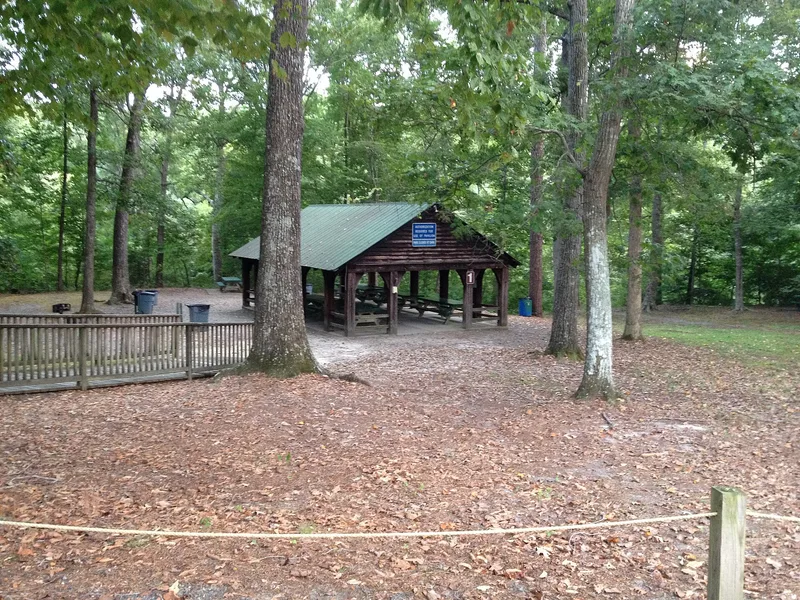
Hanover Wayside is a 35-acre public park along U.S. Route 301 in central Hanover County, Virginia, about fifteen miles north of Richmond. The Civilian Conservation Corps built it in 1937-1938 under National Park Service direction, as part of the New Deal Recreational Demonstration Areas program, which reused poor farmland for recreation aimed at lower-income families. It was one of only thirteen highway waysides built in Virginia and South Carolina. The park keeps its original character: a wooded entrance opening onto a central meadow, stone picnic grills, a rustic timber picnic shelter overlooking a lake formed by damming Kersey Creek, a one-story caretaker's cottage with outbuildings, and a louvered comfort station that follows National Park Service design guidance. Federal ownership passed to Virginia in 1943 and to Hanover County in 1983. Its integrity and its record of conservation, landscape design and rustic architecture explain its listing. It still serves local residents and visitors from the Richmond area.
Machine-generated summary. This summary was generated by a language model from the official nomination document and has not been reviewed line by line by an editor. It may contain errors. Check the source document before relying on any detail. Source: nomination document (PDF) · catalog entry. Generated October 2026 (model claude-sonnet-5-5, prompt v1.0-2026-10-29).
| Period of significance | 1937-1952 |
|---|---|
| Styles | Other: National Park Service Rustic |
| Areas of significance | Conservation, Landscape Architecture, Architecture |
| Acreage | 39.3 |
| Boundary source | NPS cultural-resource GIS polygon |
| Full listing page | Hanover Wayside (property record) |
What listing means for this property
This is a historic district. Buildings within its boundary are either contributing (they add to the district's significance) or non-contributing. Owners of contributing income-producing buildings can claim the 20% federal rehabilitation tax credit; homeowners should look at state credits. National Register districts impose no design review by themselves; a local historic district ordinance, if one exists, does (the difference explained).
General information, not legal or tax advice. Rules change; confirm with your State Historic Preservation Office or a qualified adviser.