Greyledge

Why it's listed
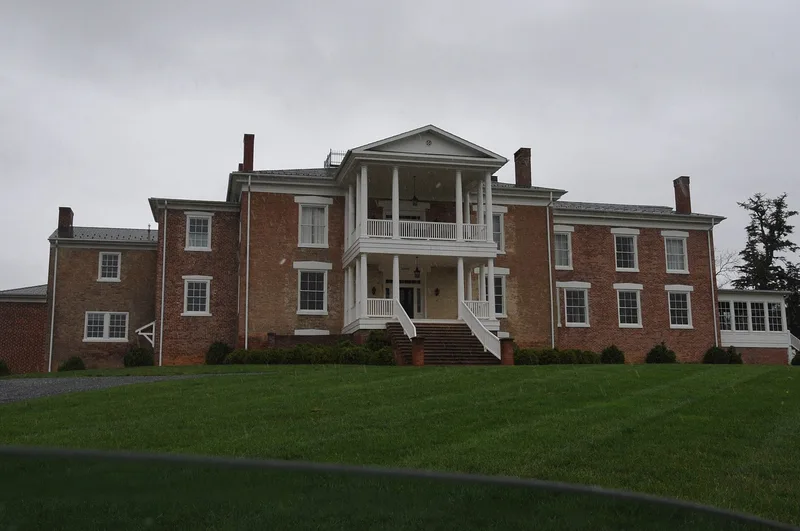
Greyledge is a 245-acre rural property in eastern Botetourt County, Virginia, set on a spur of The Knob at over 1,200 feet with views toward Purgatory Mountain and the Blue Ridge. Its core is a symmetrical two-story brick house with a center-passage plan, begun about 1854 for the Cartmill family and completed by 1857. Greek Revival details survive in the entries, mantels, door trim and stair. The Pechin family acquired the property in 1895 and added a two-story east wing in 1906, along with porches, a greenhouse, and rear wings for an ice house and porte cochere. The district also includes a washhouse converted to an apartment, a cistern, a potato cellar that stored acetylene for lighting, farm buildings, a pet cemetery, a pond, and two secondary dwellings known as the Gate House and the Creek House. The estate is linked to Ann Sisson and the nearby Etna Furnace iron industry, and it reflects farm life from the 1850s through the twentieth century.
Machine-generated summary. This summary was generated by a language model from the official nomination document and has not been reviewed line by line by an editor. It may contain errors. Check the source document before relying on any detail. Source: nomination document (PDF) · catalog entry. Generated October 2026 (model claude-sonnet-5-5, prompt v1.0-2026-10-29).
| Styles | Greek Revival |
|---|---|
| Areas of significance | Architecture, Industry, Social History |
| Acreage | 245 |
| Boundary source | NPS cultural-resource GIS polygon |
| Full listing page | Greyledge (property record) |
What listing means for this property
This is a historic district. Buildings within its boundary are either contributing (they add to the district's significance) or non-contributing. Owners of contributing income-producing buildings can claim the 20% federal rehabilitation tax credit; homeowners should look at state credits. National Register districts impose no design review by themselves; a local historic district ordinance, if one exists, does (the difference explained).
General information, not legal or tax advice. Rules change; confirm with your State Historic Preservation Office or a qualified adviser.