Greenway Historic District (Boundary Increase)

The National Park Service has not published a boundary polygon for this district; the map shows the listed properties inside it and the district's reference point.
Why it's listed
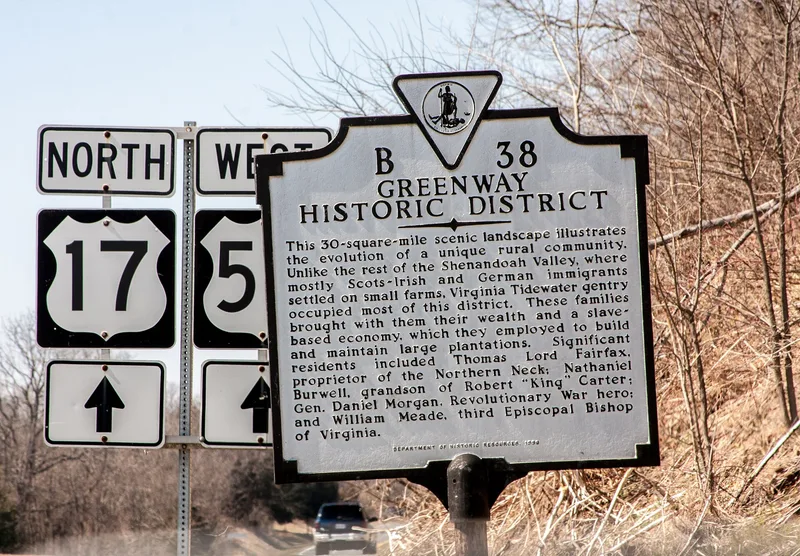
Ebenezer Baptist Church sits on the west side of Route 340 on the edge of White Post, Clarke County, Virginia, with a cemetery of about 200 marked graves surrounding it on three sides. A datestone gives 1918 for the current building, a one-story, gable-end frame structure on a rubble stone foundation. It replaced an 1897 church that burned. Pointed-arch window tracery and a diamond-shaped attic window give it a vernacular Gothic Revival look, and the interior retains its original floors, wainscot and pews. A mid-20th-century concrete block wing holds a kitchen and meeting room. The congregation received land for a burial ground in an 1884 deed, and several prominent local African-American families are buried there. The property was left out of the Greenway Historic District in 1993 because it was isolated across the highway. Later research on the church and its cemetery, and its similarity to other African-American churches in the district, led to its addition in 2007. The congregation still uses it.
Machine-generated summary. This summary was generated by a language model from the official nomination document and has not been reviewed line by line by an editor. It may contain errors. Check the source document before relying on any detail. Source: nomination document (PDF) · catalog entry. Generated October 2026 (model claude-sonnet-5-5, prompt v1.0-2026-10-29).
| Period of significance | 1760-1943 (same as original district) |
|---|---|
| Styles | Vernacular Gothic Revival |
| Areas of significance | Architecture |
| Acreage | 1.5 |
| Boundary source | not published |
| Full listing page | Greenway Historic District (Boundary Increase) (property record) |
What listing means for this property
This is a historic district. Buildings within its boundary are either contributing (they add to the district's significance) or non-contributing. Owners of contributing income-producing buildings can claim the 20% federal rehabilitation tax credit; homeowners should look at state credits. National Register districts impose no design review by themselves; a local historic district ordinance, if one exists, does (the difference explained).
General information, not legal or tax advice. Rules change; confirm with your State Historic Preservation Office or a qualified adviser.