Green Spring

Why it's listed
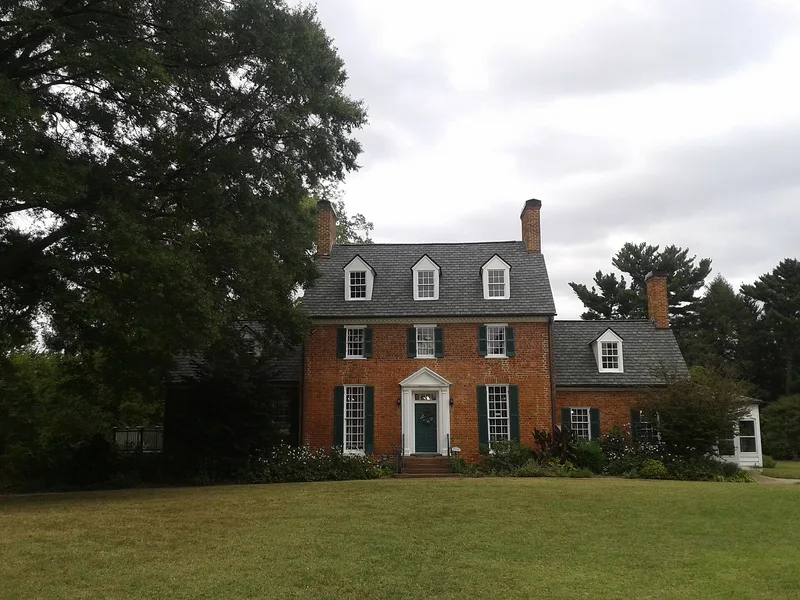
Green Spring is a historic designed landscape of about 9.5 acres in Fairfax County, Virginia, now part of a public park. Its centerpiece is a brick house probably built soon after John Moss bought the property in 1777, along with a stone spring house, formal and informal gardens, and archaeological remains of an eighteenth-century outbuilding. In 1942 the owners, Belinda and Michael Straight, hired landscape architect Beatrix Farrand and architect Walter Macomber. Farrand laid out a semicircular boxwood-edged garden with granite retaining walls and stone steps leading to garden rooms above a ravine. Macomber added wings to the house and redesigned the interiors in the Colonial Revival style, using woodwork salvaged from a Maryland tavern. The property was listed because it preserves the only known collaboration between these two figures, and Farrand's only Virginia garden. Much of the 1942 plan, including view lines and original plantings, survives under county park management.
Machine-generated summary. This summary was generated by a language model from the official nomination document and has not been reviewed line by line by an editor. It may contain errors. Check the source document before relying on any detail. Source: nomination document (PDF) · catalog entry. Generated October 2026 (model claude-sonnet-5-5, prompt v1.0-2026-10-29).
| Period of significance | ca. 1777; 1942 |
|---|---|
| Styles | Colonial; Late 19th and 20th Century Revivals: Colonial Revival |
| Areas of significance | Landscape Architecture, Architecture |
| Acreage | 9.5 |
| Boundary source | NPS cultural-resource GIS polygon |
| Full listing page | Green Spring (property record) |
What listing means for this property
This is a historic district. Buildings within its boundary are either contributing (they add to the district's significance) or non-contributing. Owners of contributing income-producing buildings can claim the 20% federal rehabilitation tax credit; homeowners should look at state credits. National Register districts impose no design review by themselves; a local historic district ordinance, if one exists, does (the difference explained).
General information, not legal or tax advice. Rules change; confirm with your State Historic Preservation Office or a qualified adviser.