Green Pastures

Why it's listed
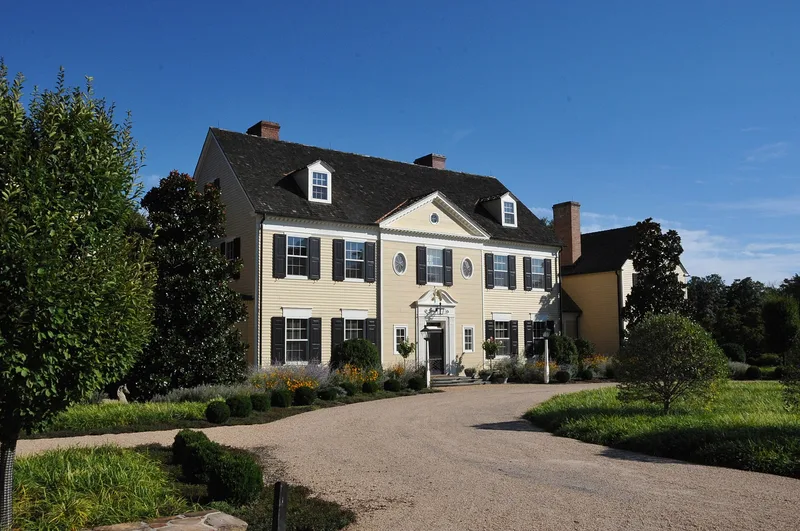
Green Pastures is a 236-acre estate southwest of Middleburg, in Virginia's hunt country. Its centerpiece is a white, two-and-one-half-story Colonial Revival manor house built in 1931-1932 for Robert Earll McConnell. New York architect Penrose V. Stout designed it, and W. J. Hanback built it. Stout drew on Mount Vernon for the modillion cornice, the pedimented central gable, the rear portico and the treatment of the siding. Inside, the main block is known for pecky cypress paneling, a Doric colonnade, a stepped-down living room, a cantilevered spiral stair and an attic closet lined entirely in Tennessee red cedar. Around the house stand twelve contributing buildings, including a stable, hostlers' quarters, smokehouse, farmer's cottage, cow barn, chicken house and a stone sheep shed. Stone walls, pastures, ponds and terraces complete the landscape. The estate is recognized for its architecture, its link to McConnell, and its role as a working country property between 1931 and 1951.
Machine-generated summary. This summary was generated by a language model from the official nomination document and has not been reviewed line by line by an editor. It may contain errors. Check the source document before relying on any detail. Source: nomination document (PDF) · catalog entry. Generated October 2026 (model claude-sonnet-5-5, prompt v1.0-2026-10-29).
| Period of significance | 1931-1951 |
|---|---|
| Styles | Late 19th and 20th Century Revivals - Colonial Revival |
| Areas of significance | Architecture, Politics/Government, Industry, Science |
| Acreage | 236.1 |
| Boundary source | NPS cultural-resource GIS polygon |
| Full listing page | Green Pastures (property record) |
What listing means for this property
This is a historic district. Buildings within its boundary are either contributing (they add to the district's significance) or non-contributing. Owners of contributing income-producing buildings can claim the 20% federal rehabilitation tax credit; homeowners should look at state credits. National Register districts impose no design review by themselves; a local historic district ordinance, if one exists, does (the difference explained).
General information, not legal or tax advice. Rules change; confirm with your State Historic Preservation Office or a qualified adviser.