Grandin Road Commercial Historic District

Why it's listed
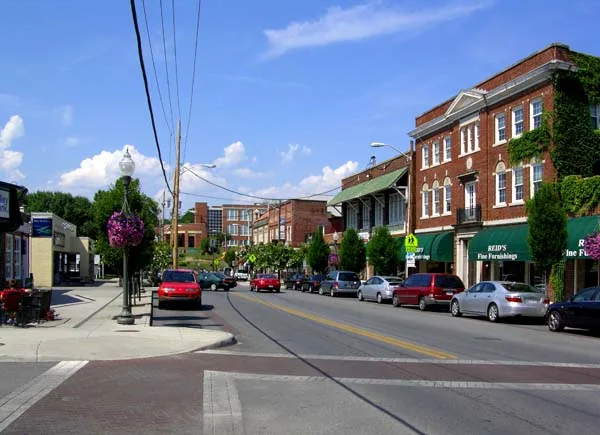
Grandin Road Commercial Historic District occupies roughly eight blocks around the intersection of Grandin Road and Memorial Avenue in southwest Roanoke. It grew out of the Virginia Heights suburb, first developed in 1906, and took shape after streetcar service reached the area by 1915 and the suburb was annexed to the city in 1919. Most surviving buildings date from the years between the world wars. They include a 1922 fire station, a 1922 elementary school by architect John A. Page, a library, a Baptist church, a Masonic lodge, grocery stores, drugstores and the Grandin Theater, designed by Eubank & Caldwell. Later additions include 1940s to 1960s service stations, a supermarket and a dry cleaner, reflecting the growing role of the automobile. The district contains 18 contributing and 5 noncontributing resources. Its buildings show Classical Revival, Spanish Colonial Revival, Art Deco and Moderne influences, and together they formed the commercial and institutional center of the surrounding residential neighborhood. The Grandin Theater remains Roanoke's only historic movie theater.
Machine-generated summary. This summary was generated by a language model from the official nomination document and has not been reviewed line by line by an editor. It may contain errors. Check the source document before relying on any detail. Source: nomination document (PDF) · catalog entry. Generated October 2026 (model claude-sonnet-5-5, prompt v1.0-2026-10-29).
| Period of significance | 1906-1952 |
|---|---|
| Styles | Classical Revival; Colonial Revival; Spanish Colonial Revival; Commercial Style; Art Deco; Moderne |
| Areas of significance | Architecture, Commerce, Community Planning and Development, Entertainment/Recreation |
| Acreage | 7 |
| Boundary source | NPS cultural-resource GIS polygon |
| Full listing page | Grandin Road Commercial Historic District (property record) |
What listing means for this property
This is a historic district. Buildings within its boundary are either contributing (they add to the district's significance) or non-contributing. Owners of contributing income-producing buildings can claim the 20% federal rehabilitation tax credit; homeowners should look at state credits. National Register districts impose no design review by themselves; a local historic district ordinance, if one exists, does (the difference explained).
General information, not legal or tax advice. Rules change; confirm with your State Historic Preservation Office or a qualified adviser.