Goodwill Historic District, Chopawamsic RDA Camp 1

Why it's listed
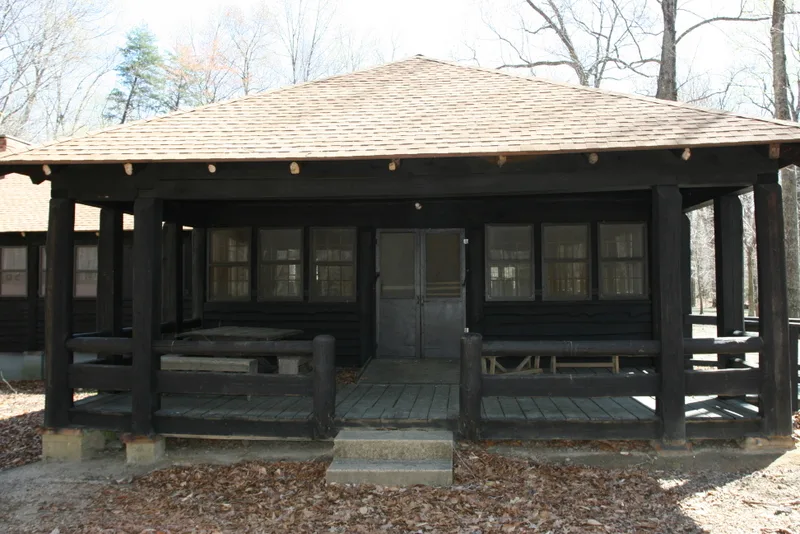
Camp Goodwill, also known as Camp Lichtman, is a 13-acre cluster of camp buildings within Prince William Forest Park near Triangle, Virginia. Between 1937 and 1940, Civilian Conservation Corps and WPA workers built the core facilities: a unit lodge, office, dining hall and kitchen, infirmary, craft lodge, two staff quarters, a washhouse and a wood-stave water tower. The site of CCC camp SP-22, now a playfield, is also included for its archaeological potential. Buildings are raised on concrete piers and clad in locally cut pine or oak waney board, with stone chimneys, round-log porch posts and, originally, cedar shingles later replaced by asphalt. The craft lodge is noted for its ornamental stone gable and jack-arch surround. The district was listed for its role in the New Deal effort to create model recreation demonstration areas and for its rustic architecture, which blends modest construction with the surrounding forest. The original camper cabins have been replaced and are not counted as historic.
Machine-generated summary. This summary was generated by a language model from the official nomination document and has not been reviewed line by line by an editor. It may contain errors. Check the source document before relying on any detail. Source: nomination document (PDF) · catalog entry. Generated October 2026 (model claude-sonnet-5-5, prompt v1.0-2026-10-29).
| Period of significance | 1933-42 |
|---|---|
| Styles | NPS rustic architecture |
| Areas of significance | Conservation, Entertainment/Recreation, Architecture |
| Acreage | 13 |
| Boundary source | NPS cultural-resource GIS polygon |
| Full listing page | Goodwill Historic District, Chopawamsic RDA Camp 1 (property record) |
What listing means for this property
This is a historic district. Buildings within its boundary are either contributing (they add to the district's significance) or non-contributing. Owners of contributing income-producing buildings can claim the 20% federal rehabilitation tax credit; homeowners should look at state credits. National Register districts impose no design review by themselves; a local historic district ordinance, if one exists, does (the difference explained).
General information, not legal or tax advice. Rules change; confirm with your State Historic Preservation Office or a qualified adviser.