Glasgow Historic District

Why it's listed
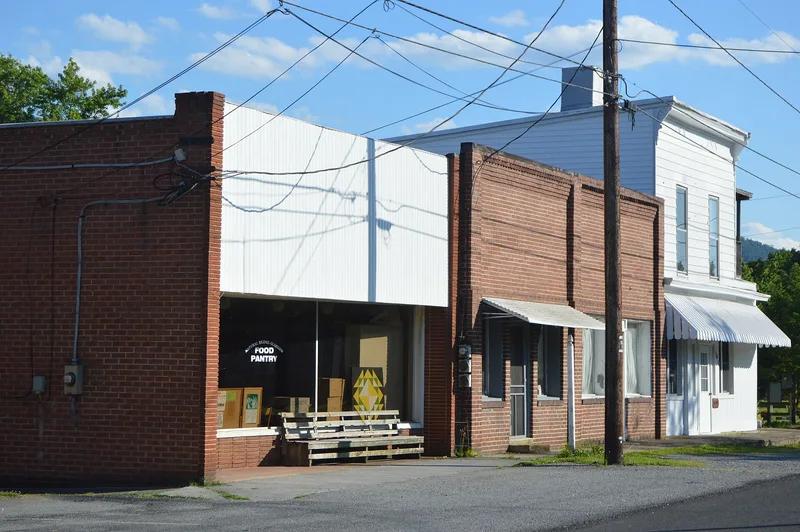
Glasgow's historic core covers about fifteen acres around Blue Ridge Drive in southern Rockbridge County, Virginia. The district holds roughly forty contributing resources, chiefly houses, commercial buildings and three Gothic Revival churches. The oldest is a Federal brick house built about 1820. Many buildings date to the early 1890s, when the Rockbridge Company laid out the town during a railroad-era boom. Several of these show Queen Anne features such as turrets, including the Alden House and a small office on McCulloch Street. The three-story Blue Ridge Building, with its original storefronts and ornamental metal hoods, was meant to signal the financial strength of the developers. The boom faltered in 1891, and a large hotel opened in 1892 and then closed for good, leaving vacant lots along the main street. Five houses from the 1920s add Craftsman bungalows and Foursquares with brick porch columns. The district is significant for its architecture, its planning and development, and its commerce, and it retains good overall integrity.
Machine-generated summary. This summary was generated by a language model from the official nomination document and has not been reviewed line by line by an editor. It may contain errors. Check the source document before relying on any detail. Source: nomination document (PDF) · catalog entry. Generated October 2026 (model claude-sonnet-5-5, prompt v1.0-2026-10-29).
| Period of significance | Ca. 1820-1945 |
|---|---|
| Styles | Federal, Late Victorian (Queen Anne), Craftsman |
| Boundary source | NPS cultural-resource GIS polygon |
| Full listing page | Glasgow Historic District (property record) |
What listing means for this property
This is a historic district. Buildings within its boundary are either contributing (they add to the district's significance) or non-contributing. Owners of contributing income-producing buildings can claim the 20% federal rehabilitation tax credit; homeowners should look at state credits. National Register districts impose no design review by themselves; a local historic district ordinance, if one exists, does (the difference explained).
General information, not legal or tax advice. Rules change; confirm with your State Historic Preservation Office or a qualified adviser.