Gate City Historic District

Why it's listed
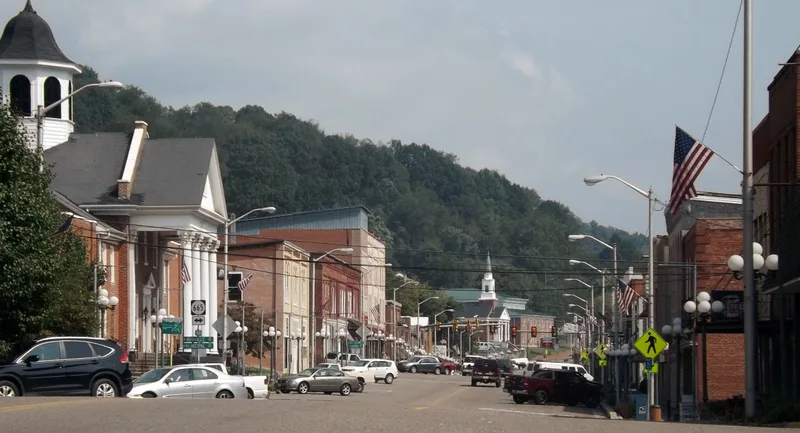
Gate City's historic downtown is a five-block commercial strip along East and West Jackson Street in Scott County, Virginia. The town has been the county seat since 1815 and grew into a commercial and social hub for surrounding farming communities, helped by its closeness to coal fields. The district contains 58 resources, including about 40 commercial buildings, seven dwellings, government buildings, a cinema and several smaller structures. The oldest standing building is the 1829 Scott County Courthouse, the tallest and most imposing structure and the focal point at West Jackson Street and Manville Road. Most surviving buildings date from 1910 to 1940 and are two- to three-story attached brick rows with corbelled cornices, stone trim and decorative brickwork, reflecting the prosperity of the early twentieth century. Some storefronts have been altered, yet the most intact blocks read as nearly continuous masonry walls. The district was recognized for preserving this commercial and civic character from 1829 to 1960.
Machine-generated summary. This summary was generated by a language model from the official nomination document and has not been reviewed line by line by an editor. It may contain errors. Check the source document before relying on any detail. Source: nomination document (PDF) · catalog entry. Generated October 2026 (model claude-sonnet-5-5, prompt v1.0-2026-10-29).
| Period of significance | 1829-1960 |
|---|---|
| Styles | Greek Revival, Commercial Style, Colonial Revival, Tudor Revival, Bungalow/Craftsman, Moderne, Minimal Traditional |
| Areas of significance | Architecture, Commerce |
| Acreage | 12.8 |
| Boundary source | NPS cultural-resource GIS polygon |
| Full listing page | Gate City Historic District (property record) |
What listing means for this property
This is a historic district. Buildings within its boundary are either contributing (they add to the district's significance) or non-contributing. Owners of contributing income-producing buildings can claim the 20% federal rehabilitation tax credit; homeowners should look at state credits. National Register districts impose no design review by themselves; a local historic district ordinance, if one exists, does (the difference explained).
General information, not legal or tax advice. Rules change; confirm with your State Historic Preservation Office or a qualified adviser.