Garland Hill Historic District
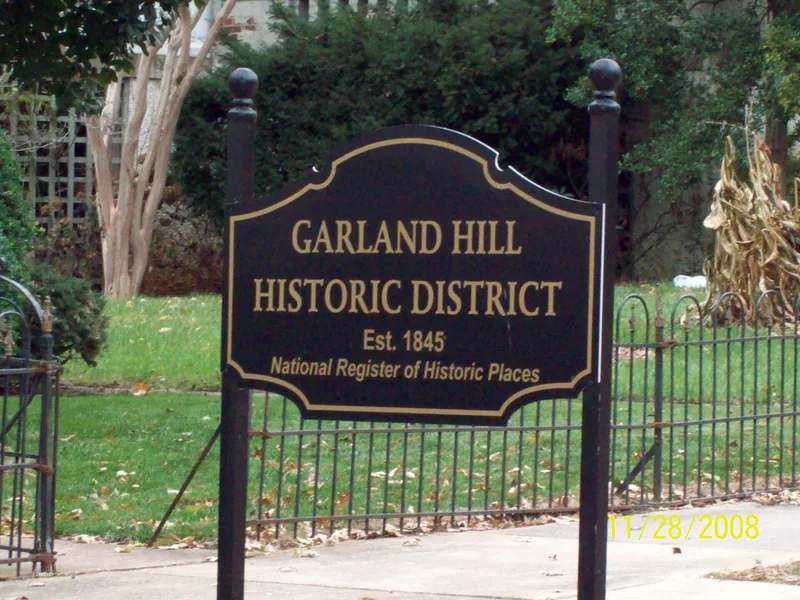

Why it's listed
Garland Hill is a quiet residential neighborhood on one of the hills surrounding downtown Lynchburg, Virginia. Its dead-end streets keep early brick paving, stone curbing, and slate and brick walks, and Madison and Harrison Streets are lined with elms, oaks and maples. Development began in 1817 with the Dunnington house at 303 Madison Street and expanded after an 1845 survey divided the farmland into lots. Samuel Garland, Sr., built the first house there, and the hill took his family's name. Early Greek Revival houses sit among large late-Victorian and early twentieth-century mansions built for tobacco and shoe industry leaders and bankers. Local architects Edward Frye, J.M.B. Lewis and Stanhope Johnson designed several of them. Together the buildings record a hundred years of changing taste and Lynchburg's shift from a rural town to an industrial city.
Machine-generated summary. This summary was generated by a language model from the official nomination document and has not been reviewed line by line by an editor. It may contain errors. Check the source document before relying on any detail. Source: nomination document (PDF) · catalog entry. Generated October 2026 (model claude-sonnet-5-5, prompt v1.0-2026-10-29).
| Styles | Greek Revival, Queen Anne, Eastlake, Georgian Revival, Jacobethan Revival, Beaux-Arts and other eclectic styles |
|---|---|
| Areas of significance | Industry, Community Planning and Development, Architecture, Social History |
| Acreage | 10 |
| Boundary source | NPS cultural-resource GIS polygon |
| Full listing page | Garland Hill Historic District (property record) |
What listing means for this property
This is a historic district. Buildings within its boundary are either contributing (they add to the district's significance) or non-contributing. Owners of contributing income-producing buildings can claim the 20% federal rehabilitation tax credit; homeowners should look at state credits. National Register districts impose no design review by themselves; a local historic district ordinance, if one exists, does (the difference explained).
General information, not legal or tax advice. Rules change; confirm with your State Historic Preservation Office or a qualified adviser.