Galax Commericial Historic District

Why it's listed
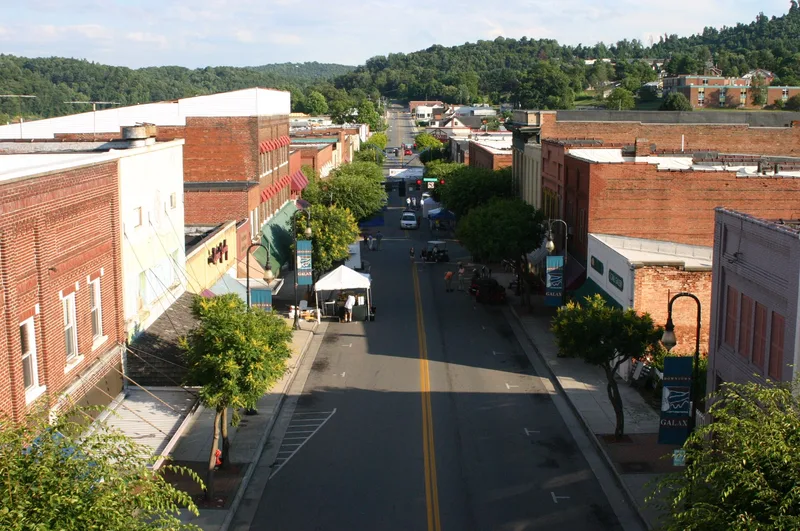
Downtown Galax, Virginia, was platted in 1903 as a twenty-six-block gridiron straddling the Grayson and Carroll county line. With no county seat function, the town had no public square, so commerce shaped the streetscape. The historic district follows Main Street and the cross streets of Center, Grayson, Carroll and Oldtown. It holds dozens of masonry buildings with shed roofs and storefronts, most of them two stories with offices or apartments above. Most date from the 1920s and show simple brick facades with recessed parapet panels and corbeled cornices. Notable examples include the 1904 Waugh Department Store, the circa 1920 Italian Revival fire station, the Colonial Theater, and the Art Deco Rex Theater with its original marquee. Later changes include modern facades added in the mid-twentieth century, yet the area keeps its commercial feel. Growth followed the town's rise, then slowed as businesses moved to shopping centers after the interstate and highway expansion. Today the district serves as a specialty retail and professional center.
Machine-generated summary. This summary was generated by a language model from the official nomination document and has not been reviewed line by line by an editor. It may contain errors. Check the source document before relying on any detail. Source: nomination document (PDF) · catalog entry. Generated October 2026 (model claude-sonnet-5-5, prompt v1.0-2026-10-29).
| Styles | Commercial Style; Classical Revival; Italian Renaissance Revival; Colonial Revival; Art Deco; Moderne |
|---|---|
| Areas of significance | Architecture, Commerce |
| Acreage | 16 |
| Boundary source | NPS cultural-resource GIS polygon |
| Full listing page | Galax Commericial Historic District (property record) |
What listing means for this property
This is a historic district. Buildings within its boundary are either contributing (they add to the district's significance) or non-contributing. Owners of contributing income-producing buildings can claim the 20% federal rehabilitation tax credit; homeowners should look at state credits. National Register districts impose no design review by themselves; a local historic district ordinance, if one exists, does (the difference explained).
General information, not legal or tax advice. Rules change; confirm with your State Historic Preservation Office or a qualified adviser.