Galax Commercial Historic District (Boundary Increase)

The National Park Service has not published a boundary polygon for this district; the map shows the listed properties inside it and the district's reference point.
Why it's listed
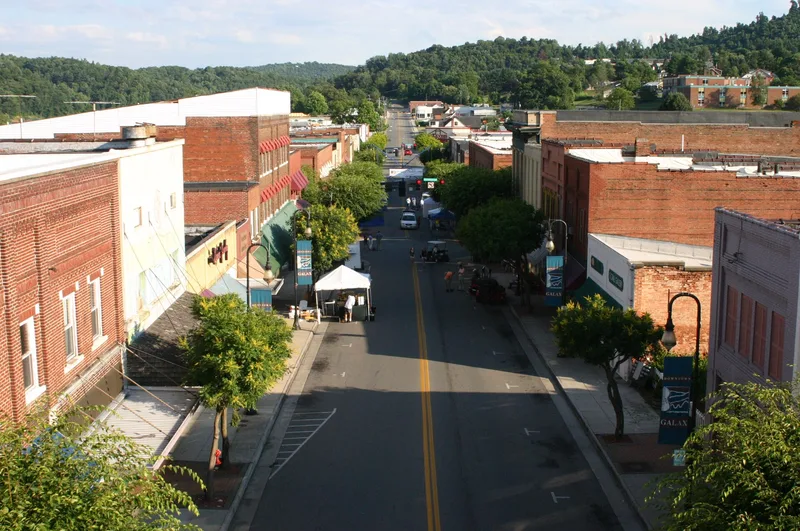
Two buildings at 107 West Oldtown Street in Galax, Virginia, were added to the Galax Commercial Historic District: the Pearlman House, built around 1920, and a garage apartment built around 1945. The house is a one-story, four-bay frame dwelling with asbestos shingle siding, a brick foundation and a steeply pitched hip roof with intersecting gables. Though vernacular in style, its complex roofline and paired windows show slight Queen Anne influence. Louie Pearlman, a Jewish merchant who moved from New York, built it near his L. Pearlman Fashion Shop on South Main Street. The neighborhood was residential until the 1930s and 1940s, when downtown commercial development expanded along West Oldtown Street. The house is now one of the few survivors of the homes that once ringed the business district, and it reflects the town's 1903 gridiron plan. The city owns it and intends to adapt it as a visitors' center.
Machine-generated summary. This summary was generated by a language model from the official nomination document and has not been reviewed line by line by an editor. It may contain errors. Check the source document before relying on any detail. Source: nomination document (PDF) · catalog entry. Generated October 2026 (model claude-sonnet-5-5, prompt v1.0-2026-10-29).
| Period of significance | 1903-1949 |
|---|---|
| Styles | Vernacular, with minor Queen Anne influences |
| Areas of significance | Architecture, Commerce, Community Planning and Development |
| Acreage | 0.9 |
| Boundary source | not published |
| Full listing page | Galax Commercial Historic District (Boundary Increase) (property record) |
What listing means for this property
This is a historic district. Buildings within its boundary are either contributing (they add to the district's significance) or non-contributing. Owners of contributing income-producing buildings can claim the 20% federal rehabilitation tax credit; homeowners should look at state credits. National Register districts impose no design review by themselves; a local historic district ordinance, if one exists, does (the difference explained).
General information, not legal or tax advice. Rules change; confirm with your State Historic Preservation Office or a qualified adviser.