Franklin Historic District (Boundary Increase)
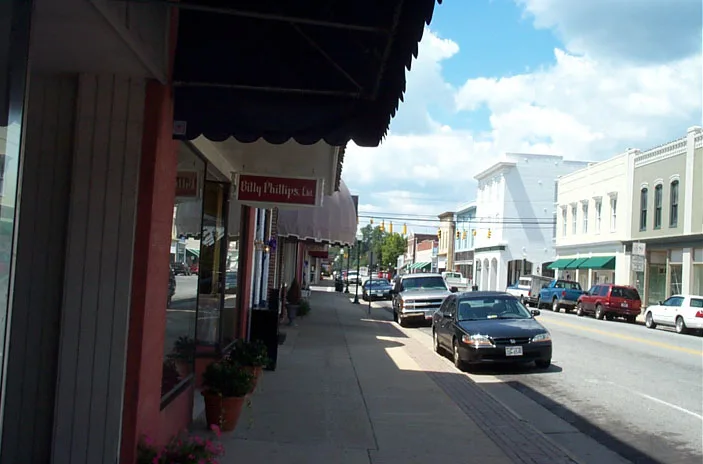

Why it's listed
Two properties just northwest of Franklin's existing historic district were added in this expansion: the Camp Family Homestead and Poplar Springs Cemetery, together about sixteen acres. The homestead has been tied to the Camp family since George Camp, Jr. acquired it in 1826. Six brothers who grew up there formed the Camp Manufacturing Company in 1887. It began as a group of sawmills, added a planing mill and later pulp and paper mills, and became the region's largest employer. The present two-story Federal-style house, dating to about 1840, was moved from Isle of Wight County in the early 1930s after an earlier home burned. It was rebuilt with two additions and later served as the dairy farm manager's residence. Poplar Springs Cemetery has been Franklin's main burial ground since 1883. Its simple stone markers commemorate three Camp brothers, the city's first mayor, and more than 62 Confederate veterans.
Machine-generated summary. This summary was generated by a language model from the official nomination document and has not been reviewed line by line by an editor. It may contain errors. Check the source document before relying on any detail. Source: nomination document (PDF) · catalog entry. Generated October 2026 (model claude-sonnet-5-5, prompt v1.0-2026-10-29).
| Period of significance | 1826 - 1956 |
|---|---|
| Styles | Early Republic: Federal |
| Areas of significance | Industry, Landscape Architecture |
| Acreage | 16 |
| Boundary source | NPS cultural-resource GIS polygon |
| Full listing page | Franklin Historic District (Boundary Increase) (property record) |
What listing means for this property
This is a historic district. Buildings within its boundary are either contributing (they add to the district's significance) or non-contributing. Owners of contributing income-producing buildings can claim the 20% federal rehabilitation tax credit; homeowners should look at state credits. National Register districts impose no design review by themselves; a local historic district ordinance, if one exists, does (the difference explained).
General information, not legal or tax advice. Rules change; confirm with your State Historic Preservation Office or a qualified adviser.