Foster Falls Historic District

Why it's listed
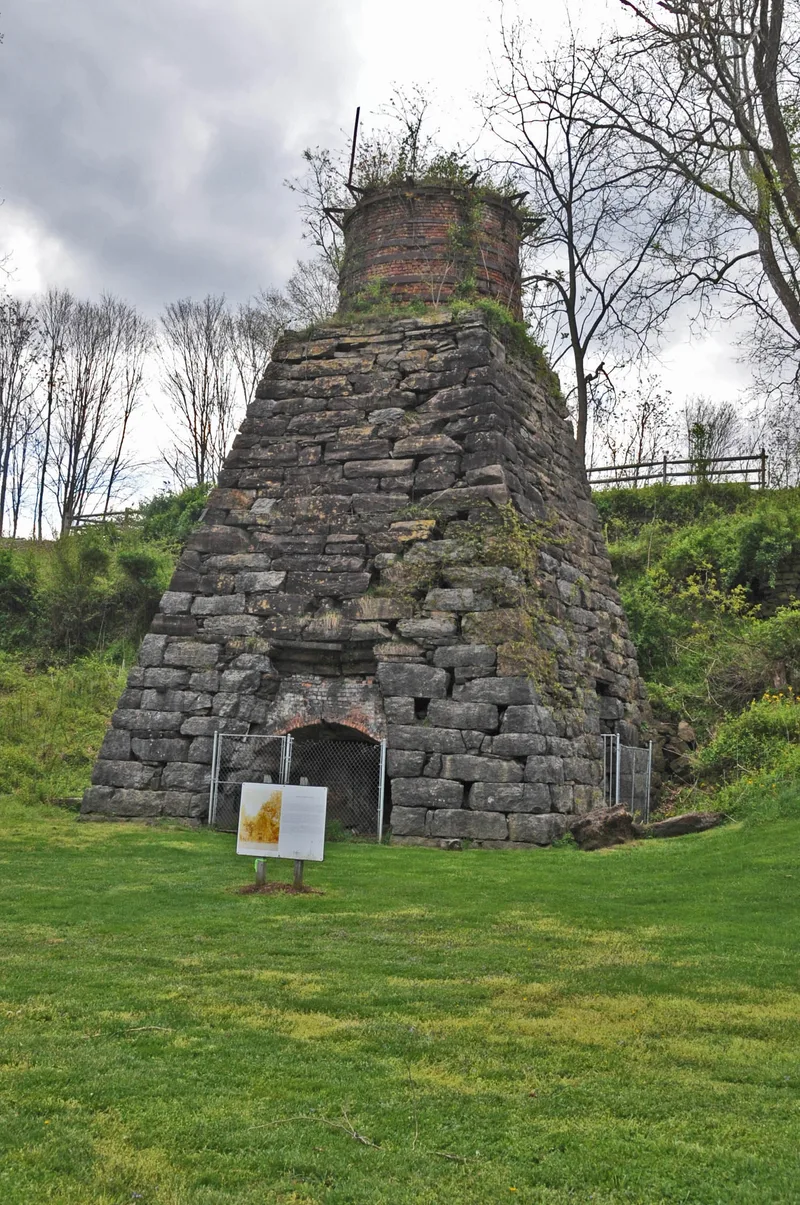
Foster Falls is a 16-acre district beside the New River in Wythe County, Virginia, now entirely within New River Trail State Park. The village grew around an iron furnace built in 1881 by the Foster Falls Mining and Manufacturing Company. After a Norfolk and Western railway station opened about 1887, businesses followed. By 1895 the village had 296 residents, about 100 houses, a post office, a gristmill and sawmill, a general store and a brick hotel. Graham and Robinson built the hotel in 1887-88. The furnace closed in 1914. In 1919 the hotel passed to the Abingdon Presbytery for an industrial school, and in 1938 it became a children's home that operated until 1962. Surviving resources include the stone furnace stack, the depot, the hotel, the general store, the mill, corncribs, a log granary and a horse barn. The company houses are gone. The district was listed for its role in local industry, commerce, transportation and social history, and for its architecture.
Machine-generated summary. This summary was generated by a language model from the official nomination document and has not been reviewed line by line by an editor. It may contain errors. Check the source document before relying on any detail. Source: nomination document (PDF) · catalog entry. Generated October 2026 (model claude-sonnet-5-5, prompt v1.0-2026-10-29).
| Period of significance | 1881-1962 |
|---|---|
| Styles | Late Victorian; No style |
| Areas of significance | Architecture, Commerce, Industry, Transportation, Social History, Engineering |
| Acreage | 16.5 |
| Boundary source | NPS cultural-resource GIS polygon |
| Full listing page | Foster Falls Historic District (property record) |
What listing means for this property
This is a historic district. Buildings within its boundary are either contributing (they add to the district's significance) or non-contributing. Owners of contributing income-producing buildings can claim the 20% federal rehabilitation tax credit; homeowners should look at state credits. National Register districts impose no design review by themselves; a local historic district ordinance, if one exists, does (the difference explained).
Noted as vacant in the nomination. Nomination documents can be decades old; current status may differ. If you are considering buying an empty listed property, read the due-diligence checklist.
General information, not legal or tax advice. Rules change; confirm with your State Historic Preservation Office or a qualified adviser.