Fort Bowman

Why it's listed
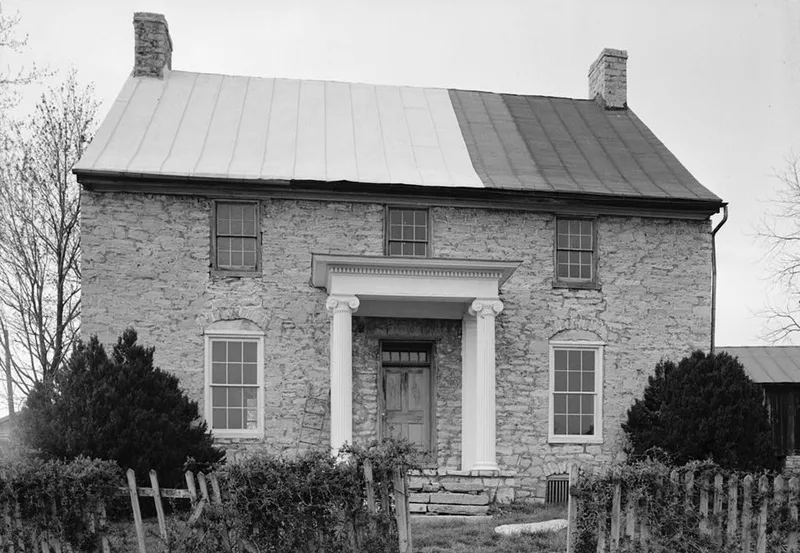
Fort Bowman, also known as Harmony Hall, is a two-story limestone house with a gable roof near Middletown in Shenandoah County, Virginia. George Bowman built it about 1753, after moving with his wife, Mary, from Pennsylvania to the Shenandoah Valley in 1731-32. Mary was the daughter of settler Jost Hite. The house is described as an important example of Pennsylvania German influence in the Valley. Its original interior woodwork survives, including dressed floorboards that form the ceilings below, vertical plank partitions beaded at the joints, and smoothed beams and joists. A later kitchen wing and an iron and wood portico are the only apparent changes. Behind the house stand early outbuildings, including a well cover and a dairy or smoke house, as well as the family graveyard. Bowman's sons figured in colonial and Revolutionary history: Abraham served as a colonel of the 8th Virginia Regiment, and Isaac and Joseph aided George Rogers Clark in the Northwest campaign of 1778-79.
Machine-generated summary. This summary was generated by a language model from the official nomination document and has not been reviewed line by line by an editor. It may contain errors. Check the source document before relying on any detail. Source: nomination document (PDF) · catalog entry. Generated October 2026 (model claude-sonnet-5-5, prompt v1.0-2026-10-29).
| Period of significance | 18th Century (specific date 1753) |
|---|---|
| Styles | Pennsylvania German influence |
| Areas of significance | Architecture, Social History |
| Boundary source | NPS cultural-resource GIS polygon |
| Full listing page | Fort Bowman (property record) |
What listing means for this property
This is a historic district. Buildings within its boundary are either contributing (they add to the district's significance) or non-contributing. Owners of contributing income-producing buildings can claim the 20% federal rehabilitation tax credit; homeowners should look at state credits. National Register districts impose no design review by themselves; a local historic district ordinance, if one exists, does (the difference explained).
General information, not legal or tax advice. Rules change; confirm with your State Historic Preservation Office or a qualified adviser.