Forestville Historic District

Why it's listed
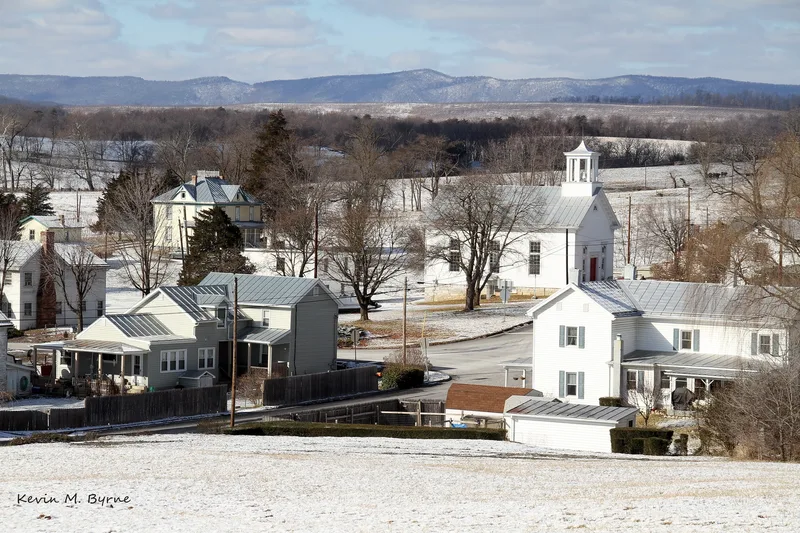
Forestville is a crossroads mill village on Holman's Creek in southern Shenandoah County, Virginia. Its core grew around a gristmill built about 1760 for Andrew Zirkle, and village lots were first formally subdivided in 1838. Most buildings are log or wood-frame houses, typically two-story I-houses on limestone foundations, reflecting the building traditions of German settlers. The district also holds a church built in 1873, a post office, two doctors' offices, a 1918 Craftsman-style school, a cemetery, barns and smokehouses. One brick house from about 1850 is the only Greek Revival building. Many structures have gained vinyl siding or new windows, and 1940s road widening removed a few buildings at the main intersection. Even so, the lot pattern closely matches an 1885 map, and surrounding farmland still frames the village. It was recognized for its role in settlement, industry, agriculture and commerce, and for its largely intact vernacular architecture.
Machine-generated summary. This summary was generated by a language model from the official nomination document and has not been reviewed line by line by an editor. It may contain errors. Check the source document before relying on any detail. Source: nomination document (PDF) · catalog entry. Generated October 2026 (model claude-sonnet-5-5, prompt v1.0-2026-10-29).
| Period of significance | ca.1760-1945 |
|---|---|
| Styles | Vernacular, with Greek Revival, Italianate, Queen Anne, Colonial Revival and Craftsman elements |
| Areas of significance | Architecture, Community Planning and Development, Industry, Agriculture, Commerce, European, Transportation |
| Acreage | 190 |
| Boundary source | NPS cultural-resource GIS polygon |
| Full listing page | Forestville Historic District (property record) |
What listing means for this property
This is a historic district. Buildings within its boundary are either contributing (they add to the district's significance) or non-contributing. Owners of contributing income-producing buildings can claim the 20% federal rehabilitation tax credit; homeowners should look at state credits. National Register districts impose no design review by themselves; a local historic district ordinance, if one exists, does (the difference explained).
General information, not legal or tax advice. Rules change; confirm with your State Historic Preservation Office or a qualified adviser.