Folly Castle Historic District (Boundary Increase)

Why it's listed
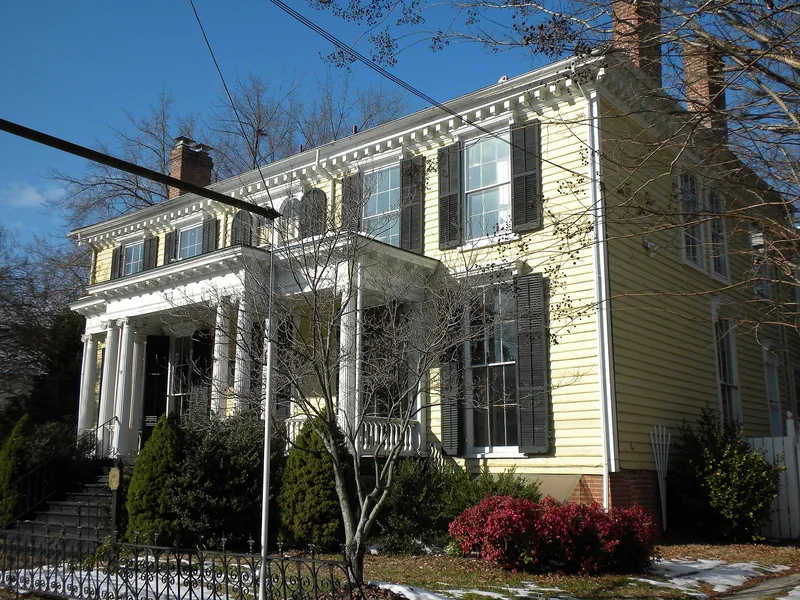
About five blocks of a residential neighborhood west of downtown Petersburg, Virginia, make up this expanded historic district, centered on West Washington Street. It includes roughly seventy-three houses and contributing outbuildings, along with two churches, a former high school and a former store. Buildings date from 1763 to 1928 and show a wide range of styles, from the Georgian Folly Castle, altered in the Italianate manner in 1874, to Queen Anne, Colonial Revival and Neo-Classical Revival designs. Housing ranges from grand mansions to modest workers' homes, and period fences, tiled walks and granite curbs survive. The district was recognized for its local architectural variety and for its Civil War connections; the McIlwaine-Friend House served as Confederate General George Pickett's headquarters in 1863-64. Its development was also tied to Petersburg's antebellum industry and commerce and its recovery after the war. Some buildings are abandoned or badly deteriorated, and a few important ones have been lost.
Machine-generated summary. This summary was generated by a language model from the official nomination document and has not been reviewed line by line by an editor. It may contain errors. Check the source document before relying on any detail. Source: nomination document (PDF) · catalog entry. Generated October 2026 (model claude-sonnet-5-5, prompt v1.0-2026-10-29).
| Period of significance | 1763 - 1928 |
|---|---|
| Styles | Federal, Georgian, Greek Revival, Gothic Revival, Italianate, Queen Anne, Colonial Revival, Neo-Classical Revival |
| Areas of significance | Architecture, Politics/Government |
| Acreage | 23 |
| Boundary source | NPS cultural-resource GIS polygon |
| Full listing page | Folly Castle Historic District (Boundary Increase) (property record) |
What listing means for this property
This is a historic district. Buildings within its boundary are either contributing (they add to the district's significance) or non-contributing. Owners of contributing income-producing buildings can claim the 20% federal rehabilitation tax credit; homeowners should look at state credits. National Register districts impose no design review by themselves; a local historic district ordinance, if one exists, does (the difference explained).
General information, not legal or tax advice. Rules change; confirm with your State Historic Preservation Office or a qualified adviser.