Folly Castle Historic District

The National Park Service has not published a boundary polygon for this district; the map shows the listed properties inside it and the district's reference point.
Why it's listed
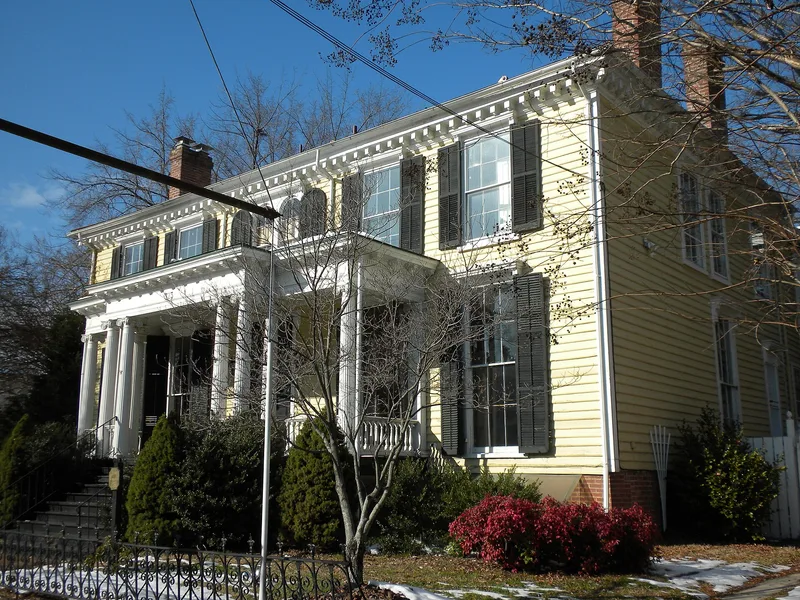
This residential district in Petersburg, Virginia, centers on West Washington Street and Perry Street and holds fourteen houses and one church dating from the late 18th and 19th centuries. Most are detached single-family homes of two or two and a half stories, built of brick or frame, and together they form a consistent streetscape in scale and mass. Styles include Georgian, Federal, Italianate, Queen Anne and Georgian Revival. Folly Castle, built in 1763 for Peter Jones, V, got its name from the supposed extravagance of a childless owner building so large a house. The McIlwaine-Friend House, completed in 1858, is an Italianate mansion that served as General George Pickett's headquarters during the Civil War. The Gothic Revival Second Presbyterian Church, from 1861-1862, used its yard as a temporary burying ground for soldiers in 1864-65. The grouping is described as a unique architectural cluster in Petersburg.
Machine-generated summary. This summary was generated by a language model from the official nomination document and has not been reviewed line by line by an editor. It may contain errors. Check the source document before relying on any detail. Source: nomination document (PDF) · catalog entry. Generated October 2026 (model claude-sonnet-5-5, prompt v1.0-2026-10-29).
| Styles | Georgian, Federal, Italianate, Queen Anne, Gothic Revival, Georgian Revival |
|---|---|
| Areas of significance | Military, Politics/Government, Architecture |
| Acreage | 6 |
| Boundary source | not published |
| Full listing page | Folly Castle Historic District (property record) |
What listing means for this property
This is a historic district. Buildings within its boundary are either contributing (they add to the district's significance) or non-contributing. Owners of contributing income-producing buildings can claim the 20% federal rehabilitation tax credit; homeowners should look at state credits. National Register districts impose no design review by themselves; a local historic district ordinance, if one exists, does (the difference explained).
General information, not legal or tax advice. Rules change; confirm with your State Historic Preservation Office or a qualified adviser.